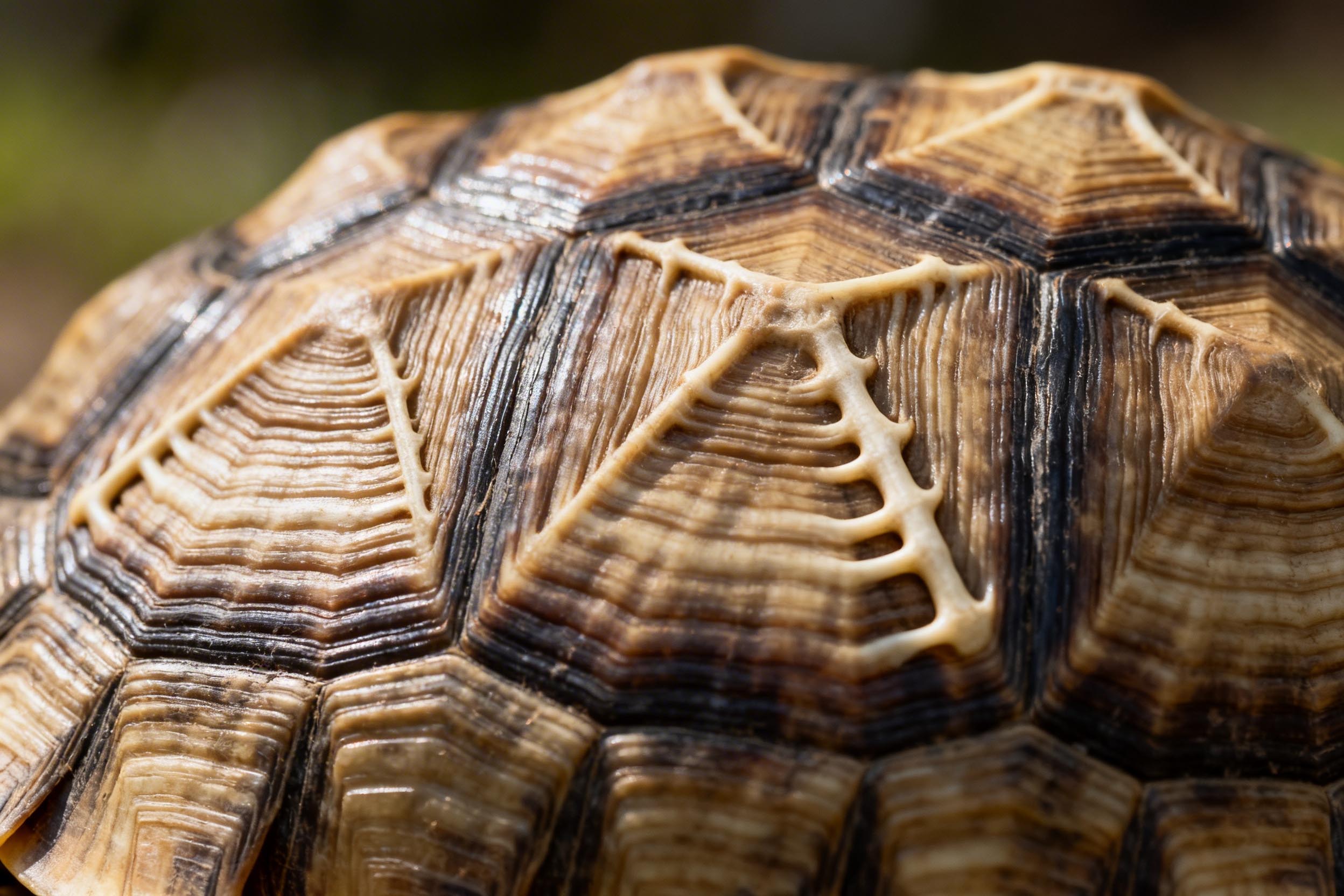
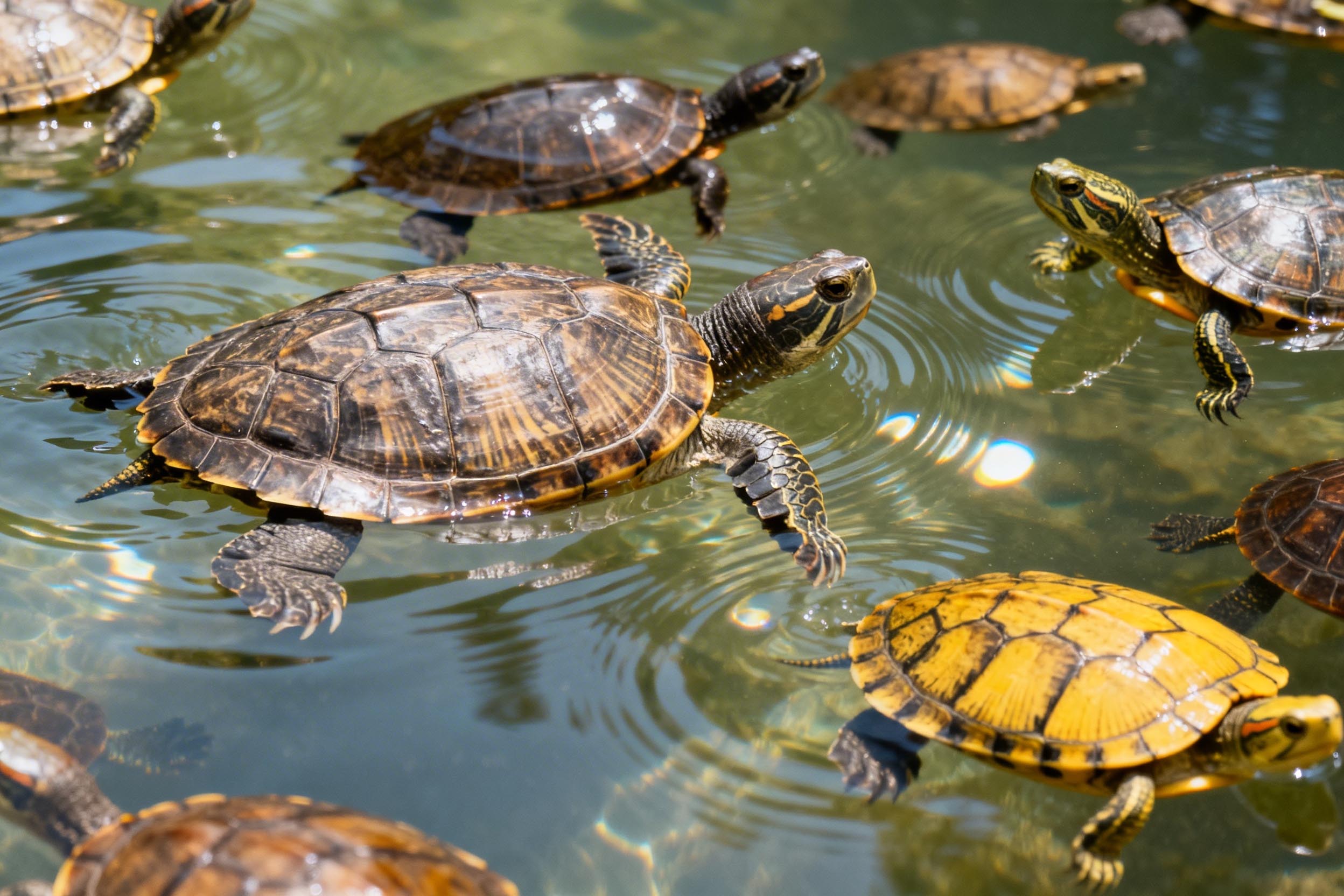
What you feed your turtle is the single biggest factor in how long it lives and how healthy it stays. Turtles are not "easy" when it comes to diet — they have species-specific nutritional needs, and the wrong food is a leading cause of shell deformities, organ damage, and premature death in captivity.
This guide covers what pet turtles actually eat, how their dietary needs change with age, which foods are safe, which are dangerous, and how to build a feeding schedule that keeps your turtle healthy.
Diet by Turtle Type
The biggest mistake new keepers make is feeding every turtle the same thing. A red-eared slider and a Hermann's tortoise have completely different nutritional needs. Here is how the major categories break down.
| Turtle Type | Diet Category | Base Diet | Protein | Plant Matter |
|---|---|---|---|---|
| Aquatic (sliders, cooters, painted) | Omnivore | Commercial pellets | 40–60% (more as juveniles) | 40–60% (more as adults) |
| Musk and mud turtles | Carnivore-leaning omnivore | Pellets + live prey | 60–70% | 30–40% |
| Box turtles (semi-aquatic) | Omnivore | Pellets + mixed fresh food | 40–50% | 50–60% |
| Tortoises (Hermann's, Russian, Sulcata) | Herbivore | Grasses and leafy greens | Under 5% | 95%+ |
| Red-footed tortoise | Omnivore-leaning herbivore | Greens + fruit + occasional protein | 5–10% | 90–95% |
If you are unsure what category your turtle falls into, look up its species in our species guides. Getting this wrong from day one leads to long-term health problems that are difficult to reverse.
How Diet Changes With Age
Even within the same species, dietary needs change significantly as a turtle grows.
Juveniles (under 2 years): growing turtles need more protein and more calories. Aquatic juveniles are primarily carnivorous in the wild and should get roughly 60% to 70% animal protein. Feed once daily, and offer a portion roughly the size of the turtle's head. Calcium supplementation is critical during this phase because the shell is actively developing.
Sub-adults (2 to 5 years): the balance gradually shifts. Protein drops to roughly 40% to 50%, and plant matter increases. Feed every 1 to 2 days.
Adults (over 5 years): plant matter should make up roughly 60% to 70% of the diet for most omnivorous species. Feed every 2 to 3 days. Overfeeding adults is the most common cause of obesity, fatty liver disease, and shell deformities in captivity.
Breeding females: egg-laying females have dramatically increased calcium and calorie needs. Supplement calcium more frequently and offer a slightly larger portion. Consult a reptile vet before and during the breeding season.
Safe Foods List
The following foods are safe for most pet turtles in appropriate amounts. Always wash fresh produce thoroughly and cut it into pieces small enough to swallow.
Commercial pellets:
- Species-appropriate commercial turtle pellets (aquatic vs. tortoise formulas)
- Pellets should be a base, not the entire diet — variety prevents nutritional gaps
Animal protein (for omnivores and carnivores):
- Earthworms, mealworms, waxworms, superworms
- Crickets, dubia roaches
- Snails (shell-on for calcium), shrimp
- Feeder fish (offer infrequently — parasite risk)
- Cooked, unseasoned chicken or fish as an occasional treat (very small amounts)
Leafy greens (all turtles, especially tortoises):
- Romaine lettuce (better than iceberg, but not a nutritional powerhouse)
- Collard greens, mustard greens, turnip greens
- Dandelion greens and flowers
- Kale (in moderation — high in oxalates)
- Watercress, endive, escarole
Other vegetables:
- Red bell pepper (high in vitamin A; many turtles are attracted to the color red)
- Carrots and carrot tops (grated for small turtles)
- Zucchini, squash, pumpkin
- Green beans, peas
- Sweet potato (cooked, in small amounts)
Aquatic plants (excellent for sliders and other herbivorous species):
- Duckweed, water hyacinth, water lettuce
- Elodea, Anacharis, hornwort
- Water lilies
Fruit (occasional treat — small amounts):
- Apple (no seeds — seeds contain cyanide compounds)
- Melon, papaya, mango, berries
- Banana (very small amounts — high in sugar)
Foods to Avoid (Some Are Toxic)
Avoid entirely:
- Dairy products — turtles are lactose intolerant and cannot digest milk, cheese, or yogurt
- Processed meats — hot dogs, bacon, deli meat, and similar foods are high in salt, fat, and preservatives
- Bread, pasta, rice — no nutritional value and difficult to digest
- Raw meat from mammals or birds — not part of a turtle's natural diet; risk of bacterial contamination
- Iceberg lettuce — almost entirely water; fills the stomach without providing nutrition
- Spinach, beet greens, Swiss chard — high in oxalates, which bind calcium and prevent absorption. Small amounts occasionally are fine, but not as a staple.
- Dog food and cat food — far too high in protein and fat for most turtles
- Fish food — formulated for fish, not turtles; lacks proper calcium and D3 balance
- Any food with added salt, sugar, or artificial seasoning
If you are unsure whether a food is safe, do not feed it. The wrong food can cause organ damage that takes months to become visible.
Feeding Schedule and Portion Size
Turtles are opportunistic feeders and will eat far more than they need if given the chance. Overfeeding is a serious problem in captivity — it causes obesity, shell deformities, fatty liver disease, and shortened lifespan.
Portion size rule: feed an amount roughly the size of the turtle's head (including the neck) per feeding session. This is a general guideline, not an exact measure — adjust based on your turtle's body condition.
| Age | Frequency | Protein % | Plant % |
|---|---|---|---|
| Juvenile (under 2 yrs) | Daily | 60–70% | 30–40% |
| Sub-adult (2–5 yrs) | Every 1–2 days | 40–50% | 50–60% |
| Adult (5+ yrs) | Every 2–3 days | 30–40% | 60–70% |
| Breeding female | Every 1–2 days | 40% | 60% + extra calcium |
Remove uneaten food within 15 minutes. Leftover food fouls the water quickly and contributes to bacterial blooms, shell rot, and respiratory infections.
Feeding in a separate container (a small tub of warm, dechlorinated water) is a good practice. It keeps the main tank cleaner and lets you monitor exactly how much the turtle is eating. After feeding, return the turtle to its main tank.
Fasting is normal. Turtles can safely go several days without food. If your turtle refuses food for more than 3 days in appropriate conditions, that is a health concern — see our respiratory infection guide and consult a reptile vet.
Supplements: Calcium, D3, and Multivitamins
Even a well-planned diet often falls short on calcium and vitamin D3, especially for indoor turtles.
Calcium: offer a calcium source two to three times per week. Options include:
- Cuttlebone (sold in pet stores for birds — turtles will bite pieces off)
- Calcium block (slow-dissolving, placed in the tank)
- Calcium powder (dust food before feeding)
Vitamin D3: calcium cannot be absorbed without vitamin D3, and turtles cannot synthesize D3 without UVB light. If your turtle has proper UVB exposure (see our UVB guide), dietary D3 is less critical. If your turtle spends limited time under UVB, choose a calcium supplement that includes D3.
Multivitamin: a reptile-specific multivitamin once per week helps prevent vitamin A, E, and B-complex deficiencies. Do not over-supplement — hypervitaminosis (vitamin toxicity) is a real risk, especially with vitamins A and D.
Vitamin A deficiency is one of the most common nutritional problems in captive turtles. Symptoms include swollen eyes, respiratory infections, and poor shell growth. Prevent it by offering vitamin-A-rich foods like red bell pepper, carrots, and sweet potato.
Common Feeding Mistakes
Mistake 1: Feeding only pellets. Commercial pellets are a base, not a complete diet. Even the best pellets lack the variety of nutrients a turtle would get in the wild. Rotate in fresh vegetables, protein, and aquatic plants.
Mistake 2: Overfeeding. Turtles beg constantly and will always act hungry. This is instinct, not an actual need. Overfeeding is the number one cause of obesity and shell deformities in captive turtles.
Mistake 3: Feeding the wrong species' diet. Tortoises cannot handle high-protein diets, and aquatic turtles cannot survive on lettuce alone. Match the diet to the species.
Mistake 4: Ignoring calcium. Especially for juveniles and egg-laying females. Without adequate calcium and UVB, turtles develop metabolic bone disease, which is painful and often irreversible.
Mistake 5: Leaving food in the tank. Uneaten food breaks down quickly and fouls the water. Remove leftovers within 15 minutes.
Mistake 6: Feeding cold food. Food straight out of the refrigerator can drop the turtle's stomach temperature and cause digestive upset. Let food come to room temperature before feeding.
Frequently Asked Questions
How often should I feed my pet turtle?
Juvenile turtles (under 2 years) should be fed once daily. Adult turtles should be fed every 2 to 3 days. Overfeeding is one of the most common causes of health problems in captive turtles, including obesity, shell deformities, and fatty liver disease.
Can turtles eat fruit?
Some turtles can eat fruit, but it should be an occasional treat, not a staple. Aquatic turtles can have small amounts of apple, melon, or berries once a week. Tortoises can have fruit slightly more often, but it should still be limited because of the sugar content. Avoid citrus fruits and avocado entirely — avocado is toxic to many reptiles.
What should I not feed my turtle?
Avoid: avocado (toxic), iceberg lettuce (no nutritional value), dairy products (turtles are lactose intolerant), processed meats, bread, chocolate, onions, garlic, citrus fruits, and any food high in fat or salt. Also avoid raw meat from mammals or birds — it is not part of a turtle's natural diet and can cause digestive problems.
Do turtles need calcium supplements?
Yes, especially for growing juveniles, egg-laying females, and any turtle kept indoors without direct sunlight. Offer a calcium source such as cuttlebone or a calcium block twice per week, or dust food with calcium powder. Calcium is only absorbed effectively when the turtle has adequate UVB lighting.
Can turtles eat fish food or dog food?
No. Fish food is formulated for fish and lacks the calcium and vitamin D3 balance turtles need. Dog food and cat food are far too high in protein and fat for most turtles and can cause organ damage over time. Use commercial turtle pellets formulated for your species instead.
How much should I feed my turtle?
A useful rule of thumb is to feed an amount roughly the size of the turtle's head, once per feeding session. Remove any uneaten food within 15 minutes to prevent it from fouling the water.
Final Thoughts
Getting the diet right is one of the most impactful things you can do for your turtle's health. A varied, species-appropriate diet with proper calcium and UVB support will prevent the majority of nutritional diseases that shorten captive turtle lifespans.
If you are unsure about a specific food, the safe answer is always: don't feed it. Turtles can go several days without food, so there is no rush. Take the time to verify before you offer anything new.
For more on turtle care, see our red-eared slider care guide and our beginner's guide to choosing a pet turtle.
Sources & References
- Ernst, C. H., & Lovich, J. E. (2009). Turtles of the United States and Canada (2nd ed.). Johns Hopkins University Press.
- VCA Hospitals. Feeding Aquatic Turtles. Retrieved 2026.
- Merck Veterinary Manual. Nutrition of Reptiles. Retrieved 2026.
- Mader, D. R. (2005). Reptile Medicine and Surgery (2nd ed.). Saunders Elsevier.
- Highfield, A. C. (2000). Practical Encyclopedia of Keeping and Breeding Tortoises and Freshwater Turtles. Carapace Press.
- Association of Reptilian and Amphibian Veterinarians (ARAV). Nutritional disorders in captive chelonians. Retrieved 2026.