Choosing your first pet turtle is not like choosing a hamster. Most turtle species live 20 to 40 years, need a tank that will keep growing with them, and require UVB lighting that most new owners underestimate. Picking the right species on day one saves you from rehoming a pet you've bonded with ten years later.
We compared the five most commonly recommended beginner species by hardiness, adult size, temperament, tank requirements, diet, and cost. If you're short on time, the summary table below gives you the shortlist — the sections after explain each species in full.
Comparison Table at a Glance
| Species | Adult Size | Lifespan | Min. Tank | Difficulty |
|---|---|---|---|---|
| Red-Eared Slider | 25–30 cm | 30–40 years | 75 gal (adult) | Easy |
| Musk Turtle | 8–14 cm | 30–50 years | 20–40 gal | Easy |
| Chinese Pond Turtle | 20–25 cm | 20–30 years | 55 gal | Moderate |
| Painted Turtle | 15–25 cm | 25–30 years | 55 gal | Easy–Moderate |
| Hermann's Tortoise | 18–25 cm | 50–80 years | 2 m² enclosure | Moderate |
1. Red-Eared Slider — The Classic First Turtle
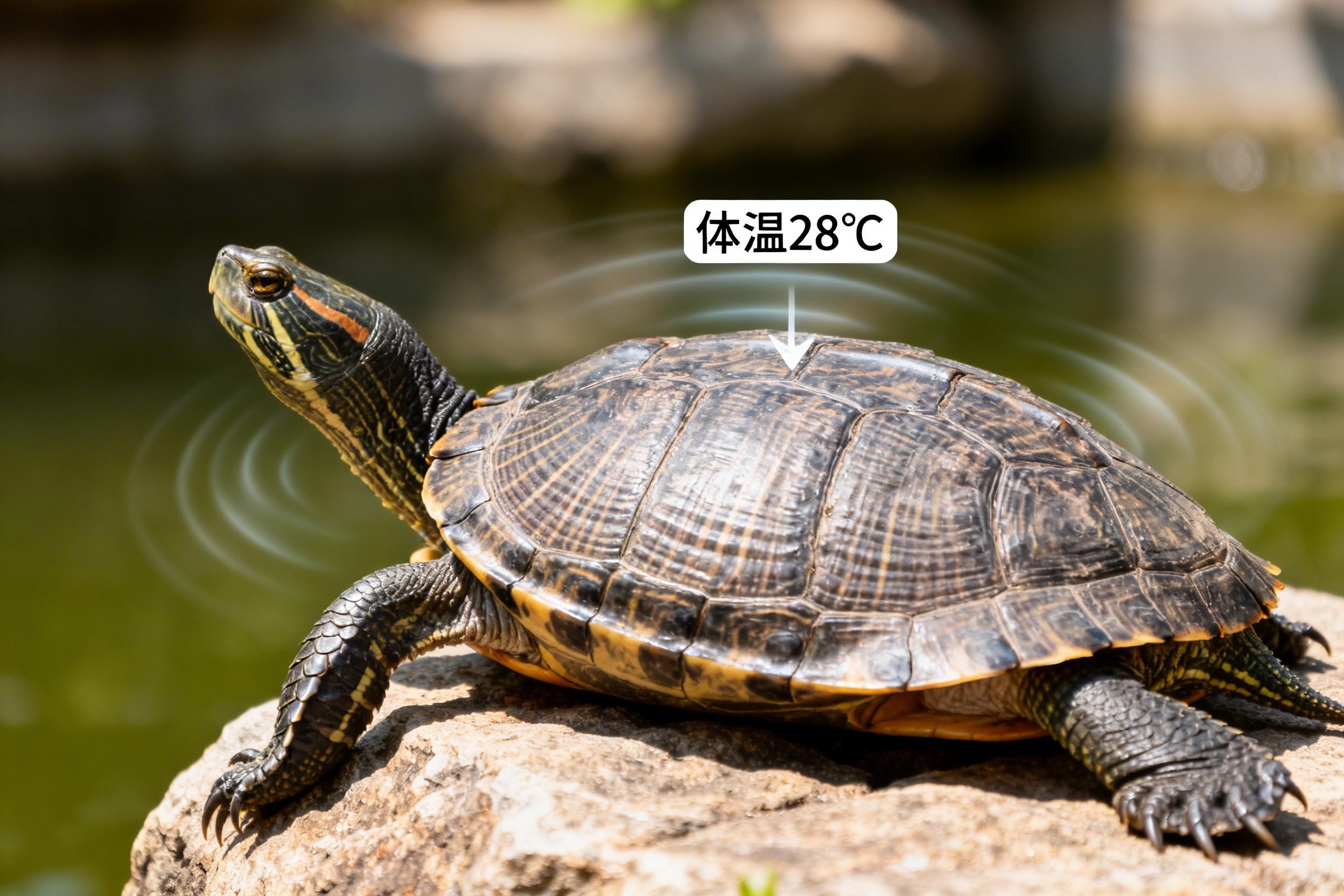
The red-eared slider (Trachemys scripta elegans) is the world's most widely kept pet turtle. It is hardy, tolerant of beginner mistakes, and eats almost anything. The distinctive red stripe behind the eye makes it instantly recognizable.
Why beginners love it: sliders tolerate a wide temperature range, do not need the water kept strictly perfect, and adapt well to a range of diets. They also have big personalities — most owners find they beg for food within weeks.
The catch: adult size. A female slider can reach 30 cm and needs a 75 to 120-gallon tank, plus a filter rated for twice that volume. If you cannot commit to that footprint in five to seven years, choose a smaller species.
Legal note: in many countries, releasing a red-eared slider into the wild is illegal because it outcompetes native species. Be prepared to keep it for life.
2. Musk Turtle — Best Small Beginner Turtle
The common musk turtle (Sternotherus odoratus) is the answer for anyone with limited space. Adults stay between 8 and 14 cm — small enough to live comfortably in a 20 to 40-gallon tank for life.
Why beginners love it: musk turtles are hardy, active, and tolerate a range of water conditions. They also walk along the bottom more than they swim, so deep water is not required. They can often be kept in small groups if the tank is large enough.
The catch: musk turtles can release a musky smell when startled — that is where the name comes from. It is not dangerous, but be prepared. They also need a basking platform and UVB, even though they spend most of their time underwater.
3. Chinese Pond Turtle (Grass Turtle) — Best for Patient Keepers
The Chinese pond turtle (Mauremys reevesii) is a popular species in Asia and increasingly in Europe and North America. Adults reach 20 to 25 cm, and males famously turn almost completely black as they mature — a striking look.
Why beginners love it: they are gentle, do not bite, and are highly interactive once they associate you with food. They also do well in mixed outdoor ponds in mild climates.
The catch: they are more sensitive to water quality than sliders. Poor filtration quickly leads to shell rot. If you start with this species, invest in a good canister filter from day one.
4. Painted Turtle — The Middle Ground
Painted turtles (Chrysemys picta) sit between the slider and the musk turtle in size and care needs. Adults are 15 to 25 cm, and their red and yellow shell markings make them one of the most attractive beginner species.
Why beginners love it: painted turtles are peaceful, cold-tolerant, and adapt well to both indoor tanks and outdoor ponds. They are less aggressive than sliders and often get along in groups.
The catch: they need clean, cool water (18 to 24°C) and a strong filter. Warmer water increases the risk of bacterial infections in this species.
5. Hermann's Tortoise — Best Land Turtle for Beginners
If you would rather keep a land animal, the Hermann's tortoise (Testudo hermanni) is the most beginner-friendly tortoise. Adults are 18 to 25 cm, need a 2 m² indoor or outdoor enclosure, and eat a plant-based diet — no live food required.
Why beginners love it: Hermann's tortoises are calm, handle well, and do not need an aquarium or filter. They also hibernate naturally, which some keepers consider a plus.
The catch: they need strong UVB lighting, a temperature gradient, and a calcium-rich diet. Metabolic bone disease is very common in indoor-kept tortoises when UVB is inadequate. Lifespan is 50 to 80 years — a genuine multi-decade commitment.
Which One Should You Choose?
- You have space for a 75+ gallon tank: red-eared slider.
- You live in an apartment or limited space: musk turtle.
- You want a tortoise, not an aquatic turtle: Hermann's tortoise.
- You want an attractive, peaceful turtle that does well in groups: painted turtle.
- You want a species with a strong personality and don't mind managing water quality: Chinese pond turtle.
Whatever you choose, buy from a reputable breeder or rescue — not from a roadside stall or a pet store that sells "turtle kits." Ask for the hatch date, feeding history, and whether the animal has been checked for parasites. A healthy start saves you months of veterinary costs later.
Frequently Asked Questions
What is the easiest turtle to keep as a pet?
The red-eared slider and the musk turtle are widely considered the easiest. Sliders are hardy and forgiving but get large; musk turtles stay small and are equally tough. Both adapt well to beginner setups.
How long do pet turtles live?
With proper care, most common pet turtles live 20 to 40 years. Some species, like musk turtles, can live 50 years, and tortoises like the Hermann's can exceed 80. This is a lifelong commitment.
What size tank does a beginner turtle need?
At minimum, a tank four times the turtle's shell length. A juvenile slider needs 40 gallons; an adult needs 75 to 120. A musk turtle can live in a 20 to 40-gallon tank for life.
Do pet turtles need a heat lamp and UVB?
Yes, both are essential. A heat lamp creates a 30 to 35°C basking spot; a UVB lamp lets the turtle synthesize vitamin D3. Without UVB, turtles develop metabolic bone disease, which is often fatal if untreated.
Can I keep two turtles in the same tank?
Sometimes, but it depends on species and tank size. Musk turtles can often live in groups. Sliders are more territorial and males may fight. Never mix species, and always provide multiple basking and hiding spots.
Final Thoughts
The best pet turtle for you is the one whose adult size and lifespan you can honestly commit to. A 30-year slider is not a beginner pet if you're not ready for 30 years. A musk turtle in a 30-gallon tank, on the other hand, is one of the most rewarding low-space reptiles you can keep.
Whatever you pick, set up the full habitat — filter, heater, UVB, basking platform — before the turtle arrives. That single step will prevent the majority of beginner health problems.
Sources & References
- Ernst, C. H., & Lovich, J. E. (2009). Turtles of the United States and Canada (2nd ed.). Johns Hopkins University Press.
- Bonin, F., Devaux, B., & Dupré, A. (2006). Turtles of the World. Johns Hopkins University Press.
- Highfield, A. C. (2000). Practical Encyclopedia of Keeping and Breeding Tortoises and Freshwater Turtles. Carapace Press.
- Association of Reptilian and Amphibian Veterinarians (ARAV). Care sheets for common pet chelonians. Retrieved 2026.