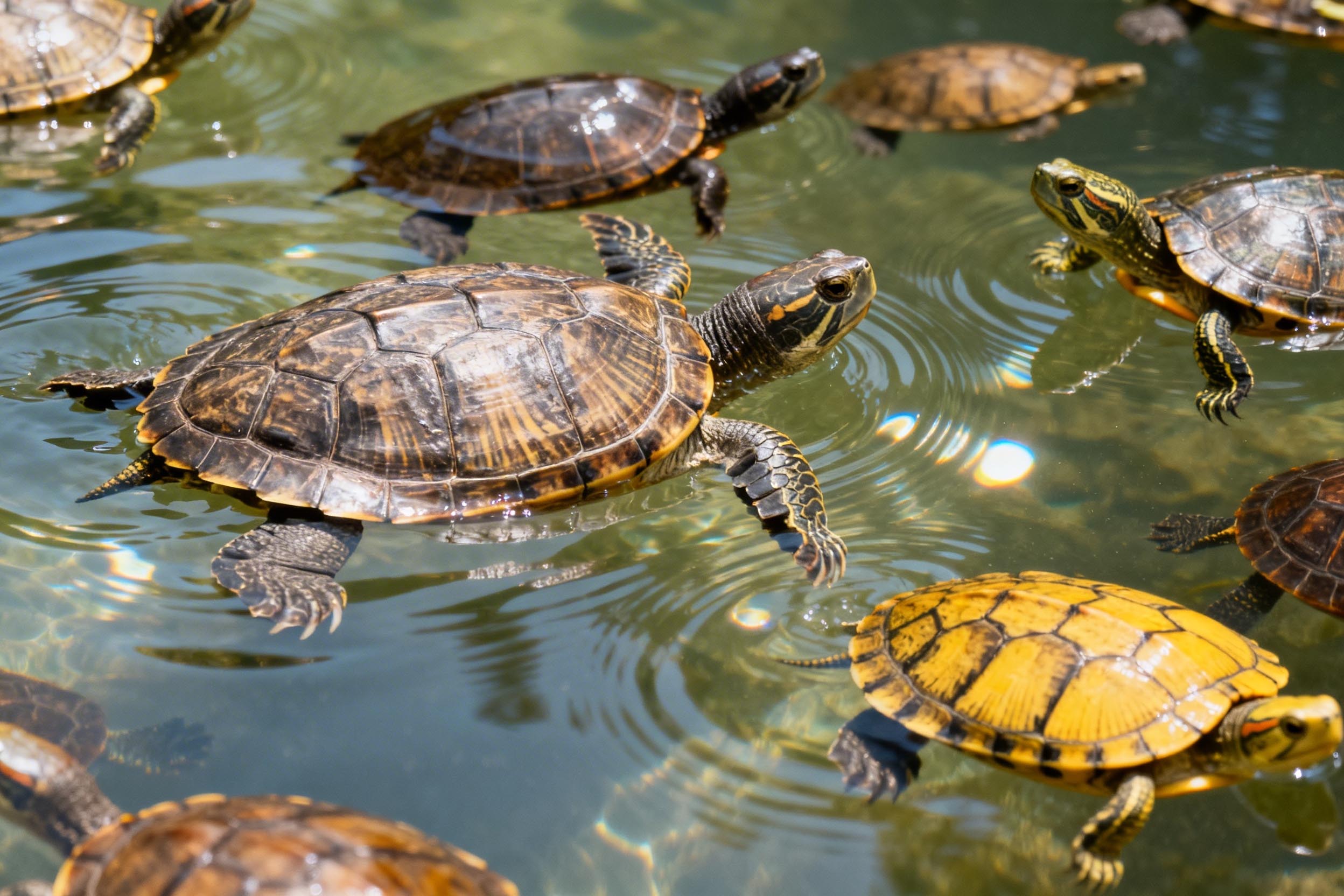
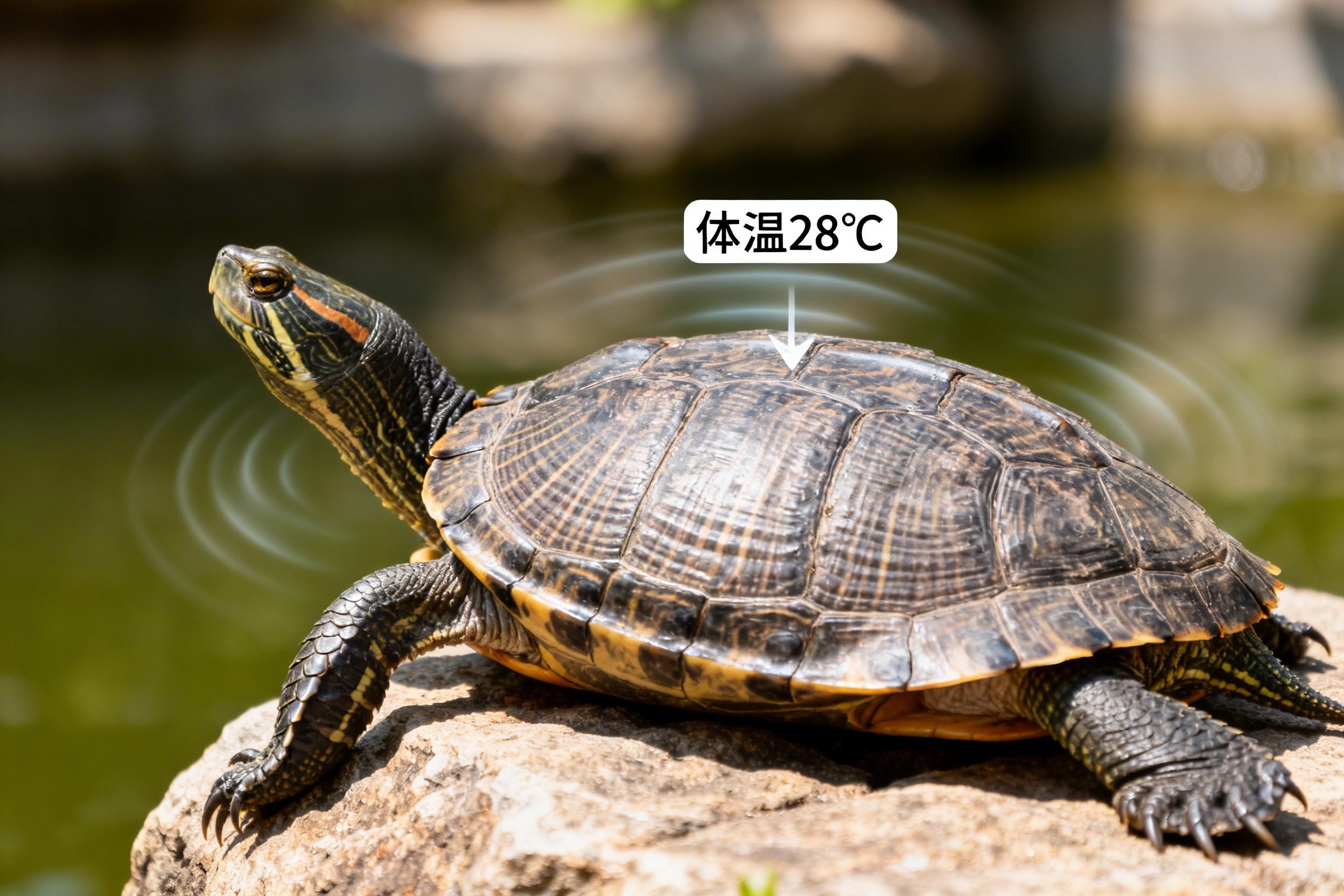
The red-eared slider (Trachemys scripta elegans) is the most widely kept pet turtle in the world. It is hardy, interactive, and visually distinctive with the red stripe behind each eye. But it is also one of the most frequently surrendered and abandoned reptiles, because most buyers do not realize how large it grows or how long it lives.
This guide covers everything a red-eared slider needs to thrive: tank size, water quality, lighting, diet, health, and the long-term commitment involved.
Species Overview
Red-eared sliders are native to the Mississippi River watershed and surrounding regions of the southeastern United States and northern Mexico. They thrive in slow-moving rivers, ponds, swamps, and shallow pools with soft, muddy bottoms.
| Attribute | Detail |
|---|---|
| Scientific name | Trachemys scripta elegans |
| Common names | Red-eared slider, red-eared terrapin, pond slider |
| Adult size | Males 7–9 inches; females 10–12 inches |
| Lifespan | 20–40 years in captivity |
| Diet | Omnivorous (shifts from carnivorous as juveniles to more herbivorous as adults) |
| Minimum tank (adult) | 75 gallons (female); 55–75 gallons (male) |
| Water temperature | 24–28°C (75–82°F) |
| Basking temperature | 32–35°C (90–95°F) |
| UVB requirement | Essential; 5.0 or 10.0 bulb, 10–12 hours daily |
Females grow significantly larger than males. A male slider typically matures at 7 to 9 inches, while a female can reach 10 to 12 inches. Males also have longer front claws and a longer tail with the cloaca positioned further from the body.
Tank Size and Water Depth
The single most common mistake new keepers make is starting with a tank that is too small. Red-eared sliders grow quickly, and a tank that looks spacious for a hatchling becomes cramped within two years.
The rule of thumb: provide at least 10 gallons of water per inch of shell length. A 4-inch juvenile needs 40 gallons; a 10-inch adult female needs 100 gallons minimum. In practice, most adult sliders do best in 75 to 120+ gallons.
Water depth should be at least 1.5 to 2 times the turtle's shell length. Sliders are strong swimmers and enjoy deep water, as long as they can easily reach the basking platform. A good target is 12 inches minimum for adults, with deeper water being better for healthy individuals.
Tank shape matters. Longer, wider tanks are easier to manage than tall, narrow ones because they provide more horizontal swimming space and make it easier to build a stable basking area. A 75-gallon "breeder" tank (48" x 18") is a better choice than a 75-gallon tall tank.
Multiple turtles: keeping more than one slider in the same tank is risky. Crowding increases stress, waste load, and the risk of bullying or bite injuries. If you must house multiple turtles, provide a tank at least double the recommended size and multiple basking and hiding spots.
Water Temperature
Red-eared sliders need stable, warm water. The target range is 24 to 28°C (75 to 82°F). Sudden drops suppress the immune system and are a leading cause of respiratory infections.
Use a submersible aquarium heater with a protective guard and a separate thermometer to verify the actual water temperature. Do not rely on the heater's built-in thermostat alone. A second thermometer placed at the opposite end of the tank helps you detect uneven heating.
When performing water changes, match the new water temperature closely to the tank water. A difference of more than 2 to 3°C can trigger illness. Always dechlorinate tap water before adding it.
Basking Area and UVB Lighting
Basking is not optional. Red-eared sliders must be able to leave the water completely and dry off under heat and UVB. Without this, they cannot synthesize vitamin D3, absorb calcium, or maintain a healthy shell.
Basking platform requirements:
- Large enough for the entire turtle to climb out and dry completely.
- Stable and non-slip. Slippery ramps and floating docks that sink too low are ineffective.
- Easily accessible from the water.
- Positioned directly under the heat lamp and UVB bulb.
- The basking area should occupy roughly 15% to 25% of the tank's surface area.
Basking temperature: 32 to 35°C (90 to 95°F) at the surface of the platform. Use a thermometer to measure the actual surface temperature, not the air temperature.
UVB lighting: essential. Use a reptile-specific UVB bulb (5.0 or 10.0) placed over the basking area. UVB does not pass through glass or plastic, so the bulb must shine directly into the habitat with no barrier between it and the turtle. Run the UVB and heat lamp for 10 to 12 hours daily, using a timer to maintain a consistent day-night cycle.
Replace UVB bulbs every 6 to 12 months, even if they still emit visible light. UVB output declines long before the bulb stops glowing.
Filtration and Water Changes
Red-eared sliders are messy. They eat, defecate, and shed scutes in the same water. A filter that would be adequate for a fish tank of the same volume will not keep up.
Choose a filter rated for at least twice the tank's water volume. For a 75-gallon tank, look for a filter rated for 150 gallons or more. Canister filters are generally the best choice because they provide mechanical, biological, and chemical filtration without taking up swimming space.
Water changes: even with a strong filter, plan on 25% to 50% partial water changes weekly. A deeper clean every few weeks is also recommended depending on tank size, feeding habits, and filter performance.
Feeding in a separate container can reduce debris in the main tank. Many keepers use a separate small tub of warm water for feeding, then return the turtle to the main tank. This is optional but helpful for keeping water clean.
Salmonella warning: turtles commonly carry Salmonella bacteria on their skin and in their gastrointestinal tracts, even when they appear healthy. Always wash your hands thoroughly after handling the turtle, tank water, or equipment. Never clean turtle equipment in a kitchen sink or bathtub used by humans.
Diet and Feeding Schedule
Red-eared sliders are omnivores, but their dietary needs shift with age. Juveniles are primarily carnivorous and need more animal protein. Adults become more herbivorous, and plant matter should make up the majority of their diet.
Juveniles (under 2 years): feed daily. Animal protein should make up roughly two-thirds of the diet.
Adults (over 2 years): feed every 2 to 3 days. Plant matter should make up roughly two-thirds of the diet, with animal protein as a smaller portion.
Animal-based foods:
- Commercial turtle pellets (a staple, but not the entire diet)
- Earthworms, mealworms, waxworms, crickets
- Feeder fish (offer infrequently due to parasite risk)
- Snails, shrimp, tadpoles
Plant-based foods:
- Dark leafy greens: romaine lettuce, collard greens, mustard greens, kale, dandelion greens, turnip greens
- Aquatic plants: duckweed, water hyacinth, water lilies, Elodea
- Red bell pepper (rich in vitamin A; many sliders are attracted to red)
- Carrot tops, green beans, parsley
Avoid: iceberg lettuce (almost no nutritional value), raw meat from mammals or birds (not part of their natural diet and difficult to digest), and high-fat fish like smelt or mackerel.
Supplements: offer a balanced multivitamin once per week and a calcium source (cuttlebone or calcium block) twice per week. Calcium is critical for shell health, but it can only be absorbed if the turtle has adequate UVB exposure.
Remove uneaten food from the tank daily to prevent it from fouling the water.
Common Health Problems
Most health problems in captive red-eared sliders trace back to husbandry: inadequate tank size, poor water quality, insufficient UVB, or wrong temperatures. The following are the most common issues.
Metabolic bone disease (soft shell): caused by calcium deficiency, usually because of inadequate UVB. The shell becomes soft and deformed, and the turtle may develop a rubbery jaw. Prevention is simple: provide proper UVB and calcium supplementation. Treatment requires veterinary care and correction of the environment.
Respiratory infection: symptoms include open-mouth breathing, nasal discharge, wheezing, floating tilted to one side, and refusing food. Caused by temperature drops, poor ventilation, or dirty water. Raise the water temperature to 28 to 30°C, keep the turtle warm, and consult a reptile vet if symptoms do not improve within 48 hours.
Shell rot: soft spots, discoloration, foul odor, or discharge on the shell. Caused by dirty water, injuries, or retained scutes. Requires cleaning, drying, and often veterinary treatment with antibiotics or antifungals.
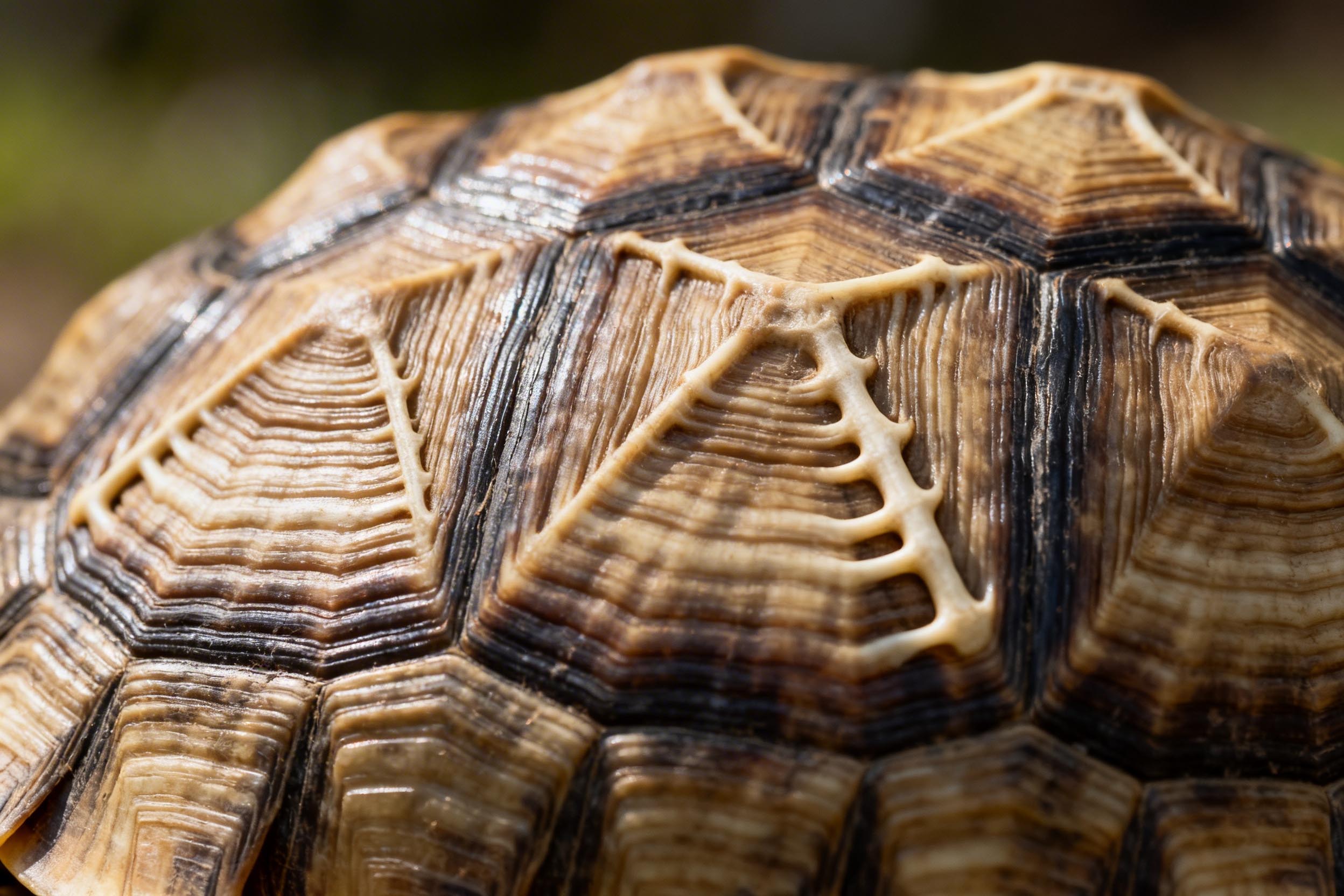
Retained scutes: the outer layer of the shell does not shed properly, leading to a bumpy, uneven appearance. Often caused by insufficient basking or poor water quality. Increase basking opportunities and ensure proper UVB.
Salmonella: a zoonotic disease that can be transmitted from turtles to humans. It does not usually make the turtle sick, but it can cause serious illness in people, especially children, the elderly, and immunocompromised individuals. Always wash hands after handling.
Appetite loss: a symptom, not a diagnosis. Check water temperature, basking access, lighting, and water quality first. If the environment is correct and the turtle still refuses food for more than 3 days, consult a reptile veterinarian.
Lifespan and Long-Term Commitment
Red-eared sliders are long-lived. In captivity, with proper care, they commonly live 20 to 30 years, and some individuals reach 40 years or more. The oldest recorded captive red-eared slider lived to be 41 years old.
This is not a pet you buy for a child and expect to outlive. A slider purchased today may still be alive in 2066. It will need a 100-gallon tank, weekly water changes, UVB bulb replacements every 6 to 12 months, and veterinary care throughout its life.
Legal and ethical note: red-eared sliders are listed as one of the 100 worst invasive species in the world. Releasing a pet slider into the wild is illegal in many countries and causes serious ecological damage, as they outcompete native turtles for food and basking sites. If you can no longer care for your turtle, contact a rescue or rehoming group. Never release it.
Frequently Asked Questions
How big of a tank does a red-eared slider need?
A general rule is 10 gallons of water per inch of shell length. A juvenile can start in a 40-gallon tank, but an adult female reaching 10 to 12 inches needs a minimum of 75 gallons, and 120 gallons or more is recommended for long-term health. Females grow larger than males.
What water temperature does a red-eared slider need?
Water temperature should be maintained between 75 and 82°F (24 to 28°C). Use a submersible aquarium heater with a guard and a separate thermometer to verify the actual temperature. Sudden drops can suppress the immune system and cause respiratory infections.
What do red-eared sliders eat?
Red-eared sliders are omnivores. Juveniles are mainly carnivorous and need more animal protein; adults shift toward a plant-heavy diet. Offer commercial turtle pellets, leafy greens like romaine and dandelion, aquatic plants, and occasional protein treats such as earthworms or feeder fish. Supplement with calcium and a multivitamin weekly.
How long do red-eared sliders live?
With proper care, red-eared sliders commonly live 20 to 30 years, and some reach 40 years or more in captivity. This is a multi-decade commitment, not a short-term pet. Plan for the turtle's adult size and lifespan before bringing one home.
Do red-eared sliders need UVB light?
Yes. UVB lighting is essential for red-eared sliders. It allows them to synthesize vitamin D3, which is required to absorb calcium. Without adequate UVB, turtles develop metabolic bone disease, soft shell, and deformities. Replace UVB bulbs every 6 to 12 months even if they still emit visible light.
Can I keep a red-eared slider with fish?
Generally, no. Red-eared sliders are opportunistic feeders and will eat any fish they can catch. Fast-moving species like guppies may survive temporarily, but they should be considered a food source rather than tank mates. Never introduce wild-caught fish, as they can carry parasites.
Final Thoughts
The red-eared slider is a rewarding pet for keepers who are prepared for the commitment. It is interactive, hardy, and full of personality. But it is not a "starter" pet in the casual sense. It needs a large tank, strong filtration, proper lighting, and decades of consistent care.
If you can provide those things, a red-eared slider will be a fascinating companion for 20 to 40 years. If you cannot, choose a smaller, shorter-lived species — or a different pet entirely.
Sources & References
- Ernst, C. H., & Lovich, J. E. (2009). Turtles of the United States and Canada (2nd ed.). Johns Hopkins University Press.
- Bonin, F., Devaux, B., & Dupré, A. (2006). Turtles of the World. Johns Hopkins University Press.
- VCA Hospitals. Feeding Aquatic Turtles. Retrieved 2026.
- Merck Veterinary Manual. Management and Husbandry of Reptiles. Retrieved 2026.
- Bednarczuk, R. The Care and Reproduction of the Red-Eared Slider. Tropical Fish Hobbyist Magazine.
- California Department of Fish and Wildlife. Red-Eared Slider (invasive species profile). Retrieved 2026.