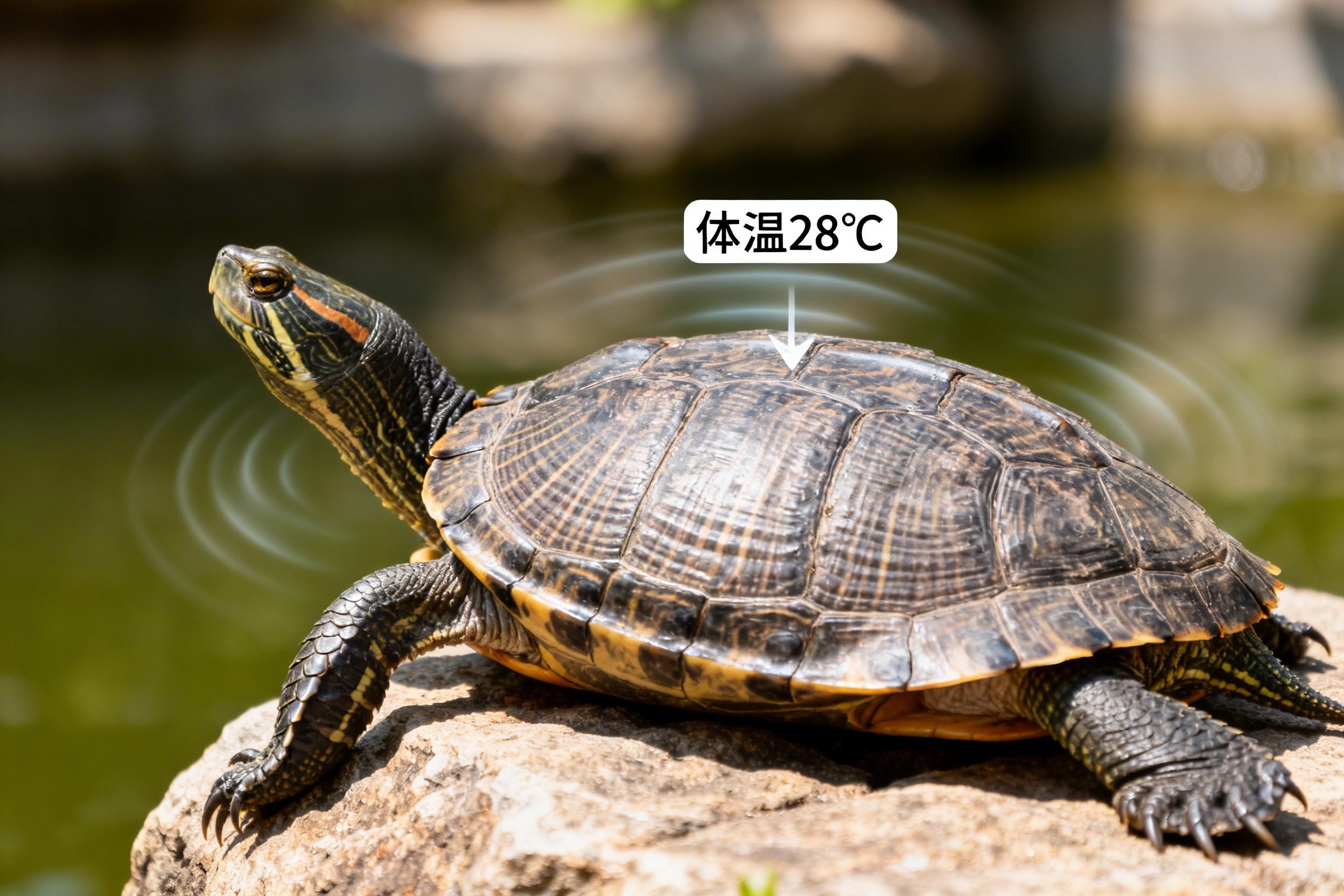
Turtles have no vocal cords — yet anyone who has kept one knows they are far from silent. They hiss, click, grunt, and even "cluck" during courtship. So how does an animal with no voice box produce sound, and what else about turtle anatomy defies intuition?
Below are ten science-backed facts about turtle anatomy, each one explaining a piece of how these 200-million-year-old reptiles survive, communicate, and thrive.
1. Turtles Have No Vocal Cords — But They Still Make Sound
Unlike mammals, birds, and most reptiles, turtles lack a larynx with true vocal folds. There is no structure inside the throat capable of vibrating to produce a "voice."
So where do the sounds come from?
- The hiss is produced when a startled turtle retracts its head rapidly. Air is forced out of the lungs through a narrow airway, producing a sharp hiss. It is a reflex, not a warning.
- The cluck is heard during courtship in species like the red-eared slider. Researchers believe it comes from rapid throat muscle vibration combined with controlled air movement.
- The grunt in some tortoises is produced by pushing air through a partially closed glottis.
In short: no vocal cords, but a surprisingly expressive acoustic repertoire.
2. The Shell Is Made of About 50 Fused Bones
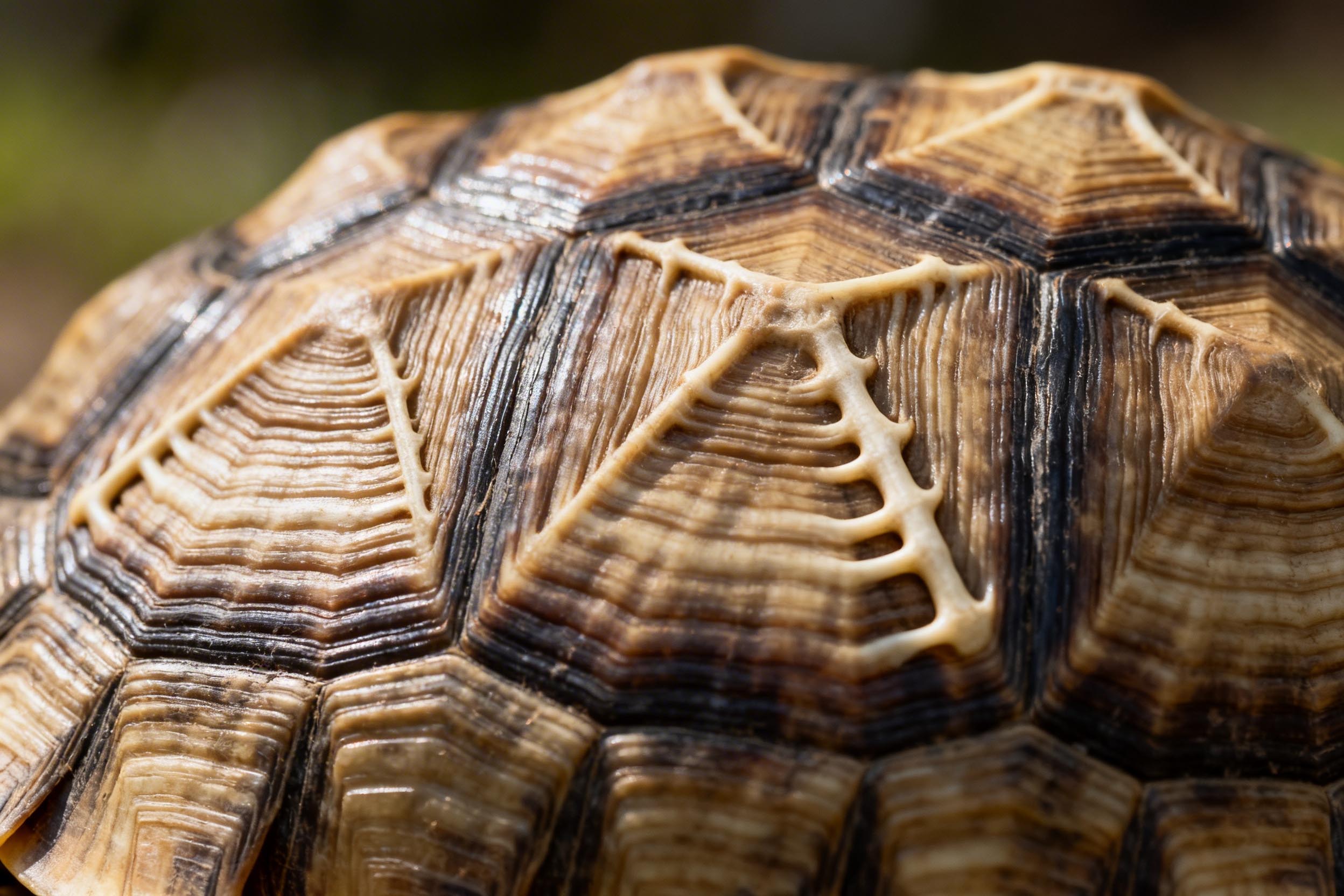
A turtle's shell is not a separate structure it "carries." It is the turtle's ribcage and spine, fused and flattened into an external armor.
The carapace (top shell) and plastron (bottom shell) together consist of roughly 50 bones — ribs, vertebrae, and dermal plates — that have grown together over evolutionary time. This is why a turtle can never leave its shell: doing so would mean tearing apart its own skeleton.
3. The Shell Has Nerves — Turtles Feel Pain
The outer layer of the shell (keratin scutes) is like a fingernail — no nerves. But directly underneath, the living bone is richly supplied with blood vessels and nerve endings.
That means:
- A gentle tap on the shell is felt as pressure.
- A crack or burn is excruciating and can lead to infection or death.
- Shell injuries require the same urgency as a broken bone in a dog or cat.
Never drill, paint, or glue anything onto a turtle's shell without veterinary guidance.
4. Some Turtles Breathe Through Their Cloaca
The cloaca is the multi-purpose opening used for excretion, reproduction, and — in some species — respiration.
The Fitzroy River turtle of Australia is the best-known example. Its cloacal bursae are lined with papillae that absorb dissolved oxygen directly from the water, allowing the animal to remain submerged for weeks. This adaptation is called cloacal respiration or aquatic respiration.
Most pet turtles cannot do this, but the fact that any turtle can is a striking reminder of how flexible reptile physiology is.
5. The Lungs Are Attached to the Shell
Because a turtle's ribs are fused into the shell, it cannot expand its chest to inhale the way mammals do. Instead, the lungs are attached to the inside of the carapace, and breathing is driven by the limbs and neck.
When a turtle pulls its legs in, the internal pressure changes, pushing air out of the lungs. When it extends its legs, air is drawn back in. If you watch a resting turtle closely, you can actually see this rhythm in its limbs.
6. Turtles Have a Three-Chambered Heart
Most reptiles — including turtles — have a heart with two atria and one ventricle. This design allows some mixing of oxygenated and deoxygenated blood, which is less efficient than the four-chambered mammalian heart but perfectly adequate for a slow-metabolism ectotherm.
Some turtles can even shunt blood away from the lungs during long dives, sending it to vital organs instead. This is one reason turtles can tolerate low-oxygen environments far better than mammals.
7. Their Sense of Smell Beats Their Vision
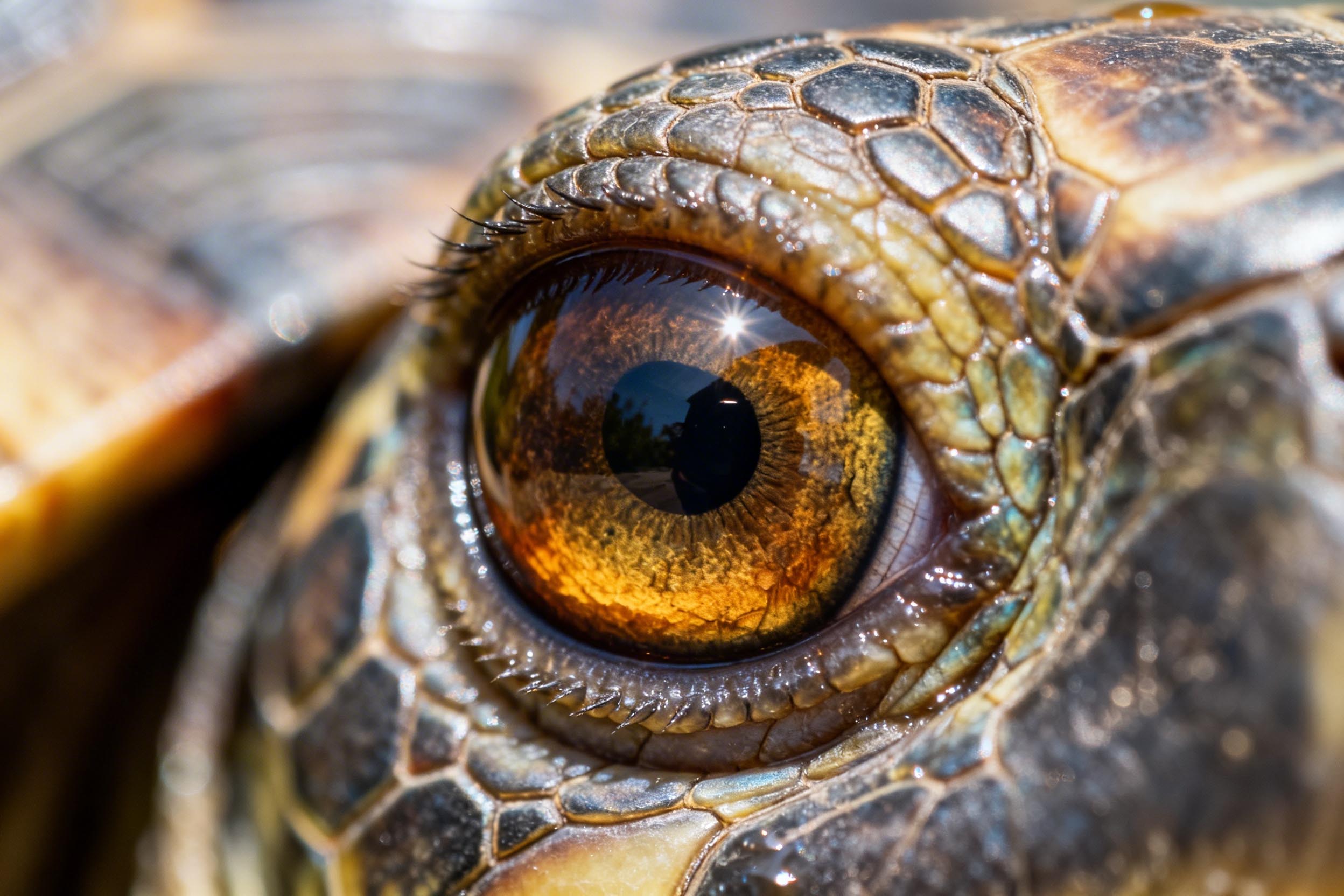
Turtles are visually capable — they see color, and many species are sensitive to red and yellow. But smell is arguably their sharper sense for locating food.
Studies on box turtles and sliders show they can detect the scent of fruit, fish, and insects from a distance, even when the item is hidden. This is why scent-based enrichment (hiding food in a feeding ball, for example) works so well for pet turtles.
8. They Detect Vibrations Through the Shell
Turtles do not have external ears. Their ear is a thin membrane of skin on each side of the head that picks up low-frequency vibrations — footsteps, ground tremors, and the deep notes of a human voice.
Combined with the shell, which also transmits vibration, this gives a turtle a "whole-body" sense of its surroundings. This is why a turtle often reacts to your approach before it can see you.
9. The Jacobson's Organ Helps Them "Taste" the Air
Like snakes and lizards, turtles have a vomeronasal organ (Jacobson's organ) in the roof of the mouth. When a turtle flicks its tongue or pumps its throat, molecules from the air are drawn into this organ, allowing it to chemically analyze its environment.
This is how a male turtle can tell whether a female is receptive, and how any turtle can tell whether an unfamiliar object is food, predator, or harmless.
10. They Have Survived for More Than 200 Million Years
Turtles first appear in the fossil record during the Late Triassic, over 200 million years ago. They have outlived the dinosaurs, survived multiple mass extinctions, and adapted to deserts, rivers, oceans, and forests.
The same anatomy that makes them look "slow" or "simple" — the fused shell, the low metabolism, the ability to hold their breath for hours — is precisely what made them one of the most successful vertebrate body plans on Earth.
Frequently Asked Questions
Can turtles hear sounds?
Yes. Turtles have no external ear openings, but they do have a middle and inner ear covered by skin. They detect low-frequency vibrations (below 1,000 Hz) very well, which is why they respond to footsteps or ground vibrations before they see you.
Do turtles feel pain in their shell?
Yes. The shell is living bone covered by keratin scutes, and it contains blood vessels and nerve endings. Injuries, burns, or fractures to the shell are extremely painful and require veterinary care.
How do turtles breathe underwater?
Most turtles hold their breath and surface to breathe with their lungs. Some species — like the Fitzroy River turtle — can absorb oxygen from the water through the cloaca, a process called cloacal respiration.
Can turtles recognize their owners?
Turtles can learn to associate certain people with food. They respond to your silhouette, movement patterns, and even clothing color, but this is a conditioned response rather than emotional attachment in the way dogs show it.
Why do turtles hiss?
The hiss is not a vocalization. When a turtle retracts its head rapidly into the shell, air is forced out of the lungs through a narrow airway, producing the sound. It is a startle reflex, not aggression.
What This Means for Turtle Keepers
Knowing turtle anatomy is not trivia — it directly affects how you care for your pet.
- Handle carefully. The shell is bone; a fall can fracture it.
- Provide UVB. The shell depends on vitamin D3 for calcium metabolism, and UVB is the only way turtles synthesize it.
- Never restrain by the shell edges. Support the plastron and allow the legs to move freely, so breathing is not compromised.
- Respect the hiss. It usually means your turtle is frightened, not aggressive.
Sources & References
- Bonin, F., Devaux, B., & Dupré, A. (2006). Turtles of the World. Johns Hopkins University Press.
- Ernst, C. H., & Lovich, J. E. (2009). Turtles of the United States and Canada (2nd ed.). Johns Hopkins University Press.
- Wyneken, J. (2001). The Anatomy of Sea Turtles. NOAA Technical Memorandum NMFS-SEFSC-470.
- Priest, T. E., & Franklin, C. E. (2002). Effect of water temperature on the cloacal respiration of the Fitzroy River turtle. Journal of Experimental Biology, 205(8), 1037–1046.
- Pough, F. H., Janis, C. M., & Heiser, J. B. (2013). Vertebrate Life (9th ed.). Pearson.