Respiratory infection is one of the most common — and most preventable — causes of death in captive turtles. It usually starts as a mild upper-airway infection and can progress to pneumonia within days. The single most important thing a keeper can do is recognize the early signs and act before the infection reaches the lungs.
Early Symptoms You Should Not Ignore
Turtles hide illness instinctively. By the time symptoms are obvious, the infection is often well established. Watch for any of the following:
- Open-mouth breathing — the classic pneumonia sign. A healthy turtle breathes with its mouth closed.
- Nasal discharge — bubbles, clear or white fluid from the nostrils.
- Wheezing or clicking when breathing. In severe cases you can hear it across the room.
- Floating tilted — the turtle lists to one side in the water because one lung is fluid-filled.
- Refusing food for more than 2 to 3 days in a normally eager eater.
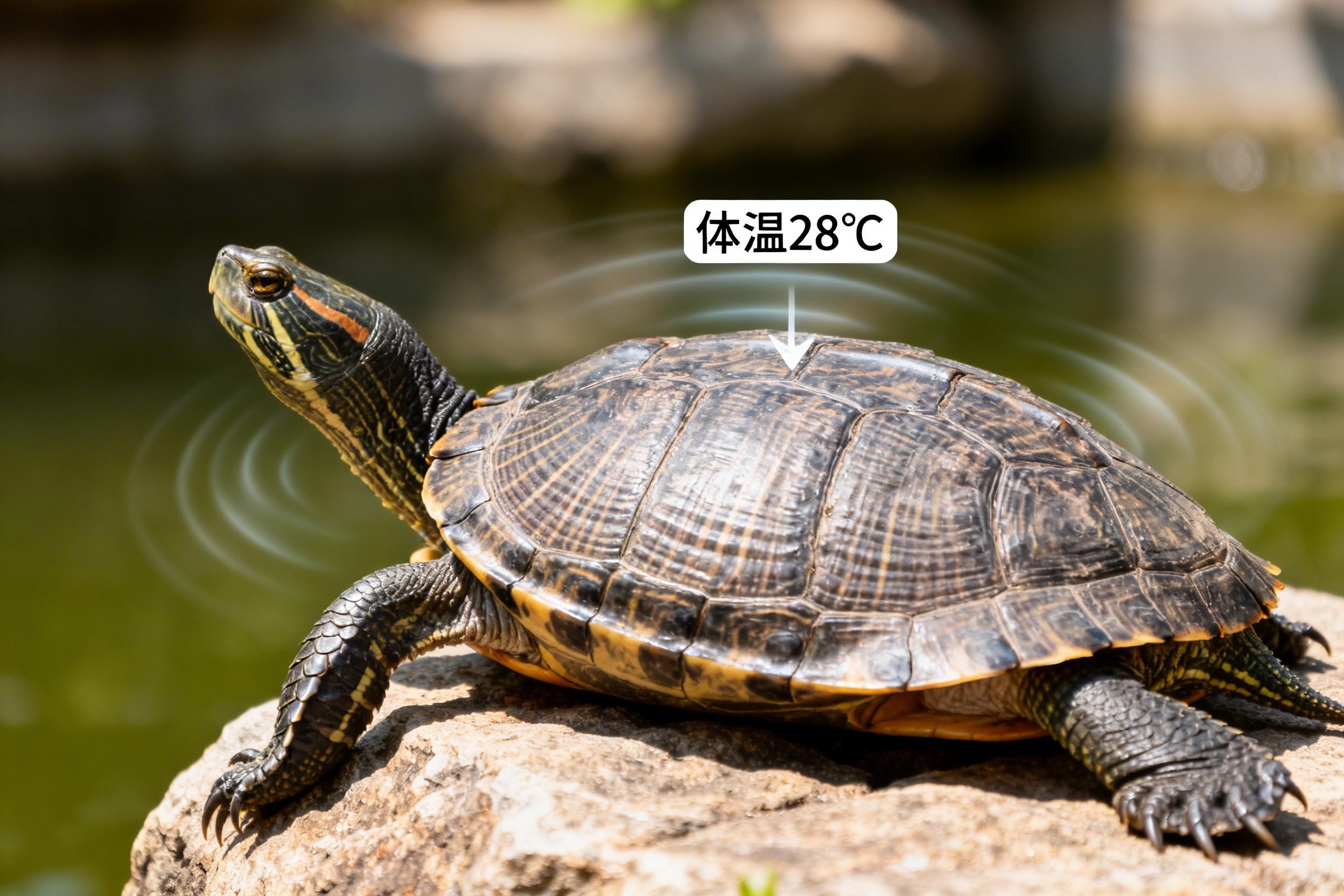
- Excessive basking — the turtle may stay on the platform all day, unwilling to enter the water.
- Lethargy and swollen eyes — often a late sign, indicating the infection has progressed.
Any single one of these signs is enough to raise the temperature and call a vet. Do not "wait and see."
Common Causes
Respiratory infections in captive turtles almost always trace back to husbandry. The most common causes are:
- Temperature drops. Water below 22°C for extended periods weakens the immune system. Drafts and open windows are a frequent trigger.
- Poor ventilation. Stale, humid air in a closed tank encourages bacterial growth.
- Inadequate basking temperature. Without a 30 to 35°C hotspot, the immune system cannot function properly.
- Dirty water. High bacterial load in the water overwhelms the turtle's defenses.
- Stress from transport, overcrowding, or bullying. Stress is a well-documented immune suppressant.
- Vitamin A deficiency. A diet lacking in vitamin A causes respiratory epithelium to weaken, making infection more likely.
Home Treatment for Mild Cases
If the infection is caught very early, before the turtle stops eating and before it is floating tilted, the following steps can resolve it without antibiotics. If at any point the turtle gets worse, escalate to a vet.
1. Raise the temperature immediately. Bring the water to 28–30°C and the basking spot to 32–35°C. Use a thermostat-controlled heater so the temperature does not swing overnight.
2. Isolate the turtle. Move it to a quiet hospital tank with clean, warm water. Reduce handling to the absolute minimum.
3. Keep the water clean. Change 50% of the water daily in the hospital tank. In the main tank, do a full clean of the filter and substrate before reintroducing the animal.
4. Increase vitamin A. Offer vitamin-A-rich foods such as grated carrot, sweet potato, or a commercial pellet fortified with vitamin A. If the turtle is not eating, ask your vet about a vitamin A injection.
5. Provide a stable dry basking area. A turtle that can dry off completely fights infection far better than one that stays wet.
Improvement should be visible within 24 to 48 hours. If it is not, or if the turtle starts to float tilted or refuse food completely, the infection has likely reached the lungs and requires antibiotics.
When to See a Vet
Contact an exotic animal vet immediately if:
- The turtle has stopped eating for more than 3 days.
- It is floating tilted or cannot submerge.
- There is a thick or colored nasal discharge.
- It is breathing with its mouth open most of the time.
- Symptoms have not improved within 48 hours of raising the temperature.
A vet will typically examine the mouth and nostrils, listen to the lungs with a stethoscope, and may take a nasal swab for culture. For confirmed pneumonia, injectable antibiotics (often enrofloxacin or ceftazidime) are the standard treatment. Oral antibiotics are less effective in turtles because absorption is unpredictable.
How to Prevent It
- Maintain water temperature between 24 and 28°C for most species, with a basking spot of 32 to 35°C.
- Use a thermostat to prevent night-time drops.
- Filter the water aggressively and change 25 to 30% weekly.
- Provide a full-spectrum UVB lamp on a 10 to 12-hour cycle. Replace the bulb every 6 to 12 months.
- Feed a varied, vitamin-A-rich diet, not just pellets.
- Quarantine any new turtle for 30 days before introducing it to an existing tank.
Most respiratory infections are a husbandry problem, not a random event. Fix the environment and recurrence becomes rare.
Frequently Asked Questions
How do I know if my turtle has a respiratory infection?
The most reliable early signs are open-mouth breathing, bubbles from the nostrils, a wheezing or clicking sound, floating tilted to one side, and refusing to eat. Any one of these is enough reason to act immediately.
Can a turtle respiratory infection heal on its own?
Very mild cases in a robust adult can improve with immediate warming and stress reduction. However, most infections progress to pneumonia without treatment, and pneumonia is frequently fatal. Do not wait more than 24 to 48 hours before escalating if symptoms persist.
What temperature should I keep a sick turtle at?
Raise the water to 28 to 30°C and the basking spot to 32 to 35°C. Keep it stable around the clock. Do not exceed 30°C in the water itself.
Can I use human antibiotics on my turtle?
Never without veterinary guidance. Dosage depends on species, weight, and the specific bacteria. Incorrect dosing can be fatal and contributes to antibiotic resistance.
How long does recovery take?
Mild cases improve in 3 to 5 days and fully resolve in 1 to 2 weeks. Severe pneumonia can take a month or more and often requires injectable antibiotics.
Sources & References
- Carpenter, J. W. (2013). Exotic Animal Formulary (4th ed.). Elsevier Saunders.
- Mader, D. R. (2005). Reptile Medicine and Surgery (2nd ed.). Saunders Elsevier.
- Association of Reptilian and Amphibian Veterinarians (ARAV). Respiratory disease in chelonians. Retrieved 2026.
- Girling, S. J., & Raiti, P. (2004). BSAVA Manual of Reptiles (2nd ed.). British Small Animal Veterinary Association.