In everyday English, "turtle" and "tortoise" are often used interchangeably. In biology, they are not the same thing. The difference comes down to habitat, shell shape, feet, and diet. This guide gives you a clear, practical way to tell them apart — and corrects a few common myths along the way.
The Scientific Distinction
Both turtles and tortoises belong to the same order: Testudines. This order contains roughly 360 living species, spread across several families.
- Tortoises belong to a single family: Testudinidae. They are a well-defined group — all tortoises share the same basic adaptations for life on land.
- Turtles is a broader term. It covers everything else: sea turtles (Cheloniidae), snapping turtles (Chelydridae), pond turtles (Geoemydidae), softshell turtles (Trionychidae), and more.
This means, in strict scientific terms: all tortoises are turtles, but not all turtles are tortoises. When biologists say "turtle," they usually mean the entire order. When they say "tortoise," they mean the land-dwelling family specifically.
Turtle vs Tortoise: Comparison Table
| Feature | Turtle (aquatic / semi-aquatic) | Tortoise (land) |
|---|---|---|
| Habitat | Water, or near water | Entirely on land |
| Shell shape | Flat, streamlined, hydrodynamic | High-domed, heavy |
| Feet | Webbed feet or flippers | Column-like, clawed, no webbing |
| Diet | Usually omnivorous | Almost always herbivorous |
| Swimming | Strong swimmers | Cannot swim; can drown |
| Lifespan | 20–60 years typical | 50–100+ years common |
| Size range | 10 cm (musk turtle) to 2 m (leatherback sea turtle) | 10 cm (speckled padloper) to 1.3 m (Galápagos tortoise) |
| Speed on land | Slow, awkward | Slow, deliberate |
| Claws | Short, sharp | Long, stout, for digging |
Shell Shape: Flat vs Domed
The shell is the first clue. It evolved under different pressures for water and land.
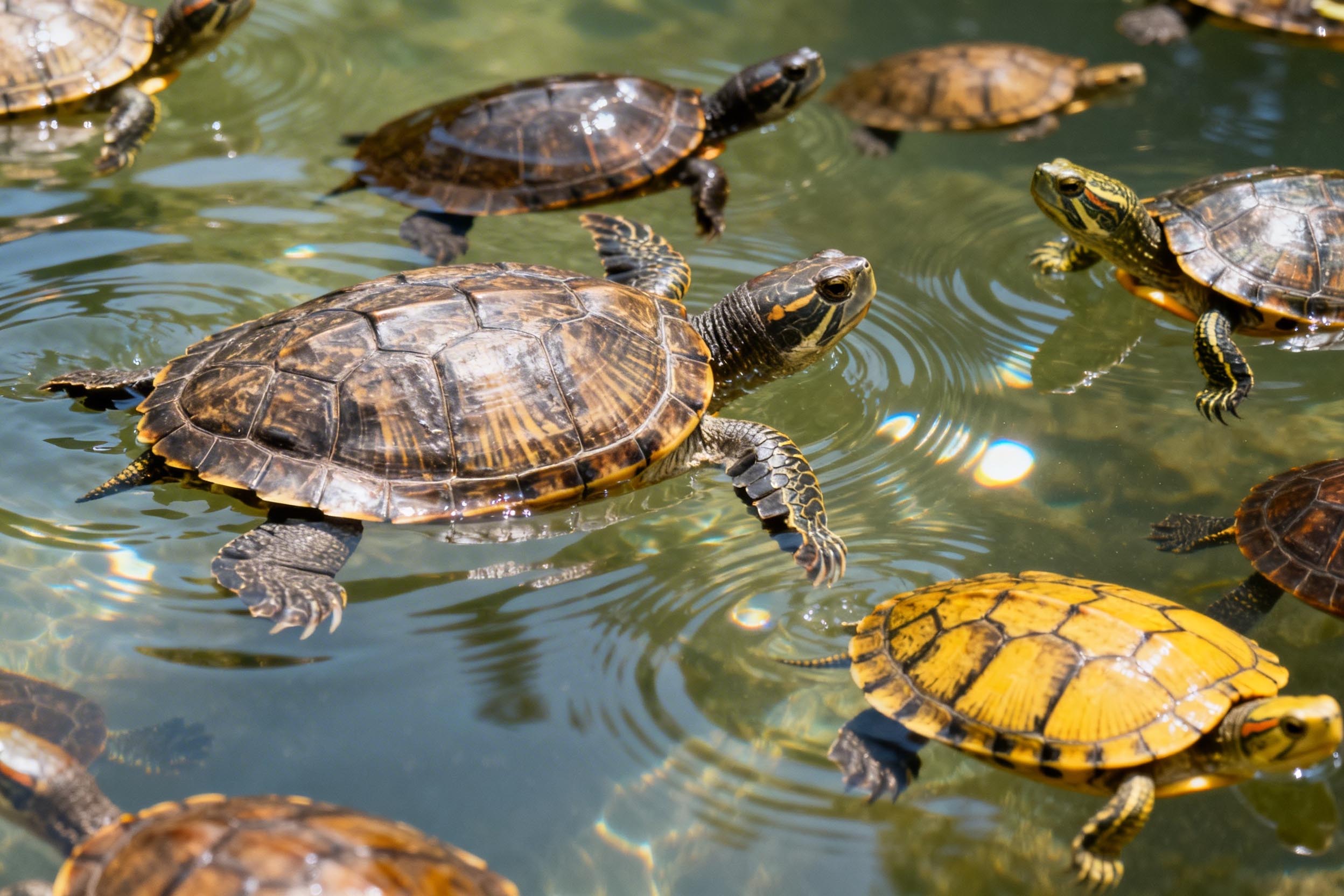
Aquatic turtles have flat, streamlined shells. Water resistance matters when you swim for a living, so their carapace is smooth and low. Sea turtles take this to the extreme — their shells are almost tear-drop shaped for open-ocean swimming.
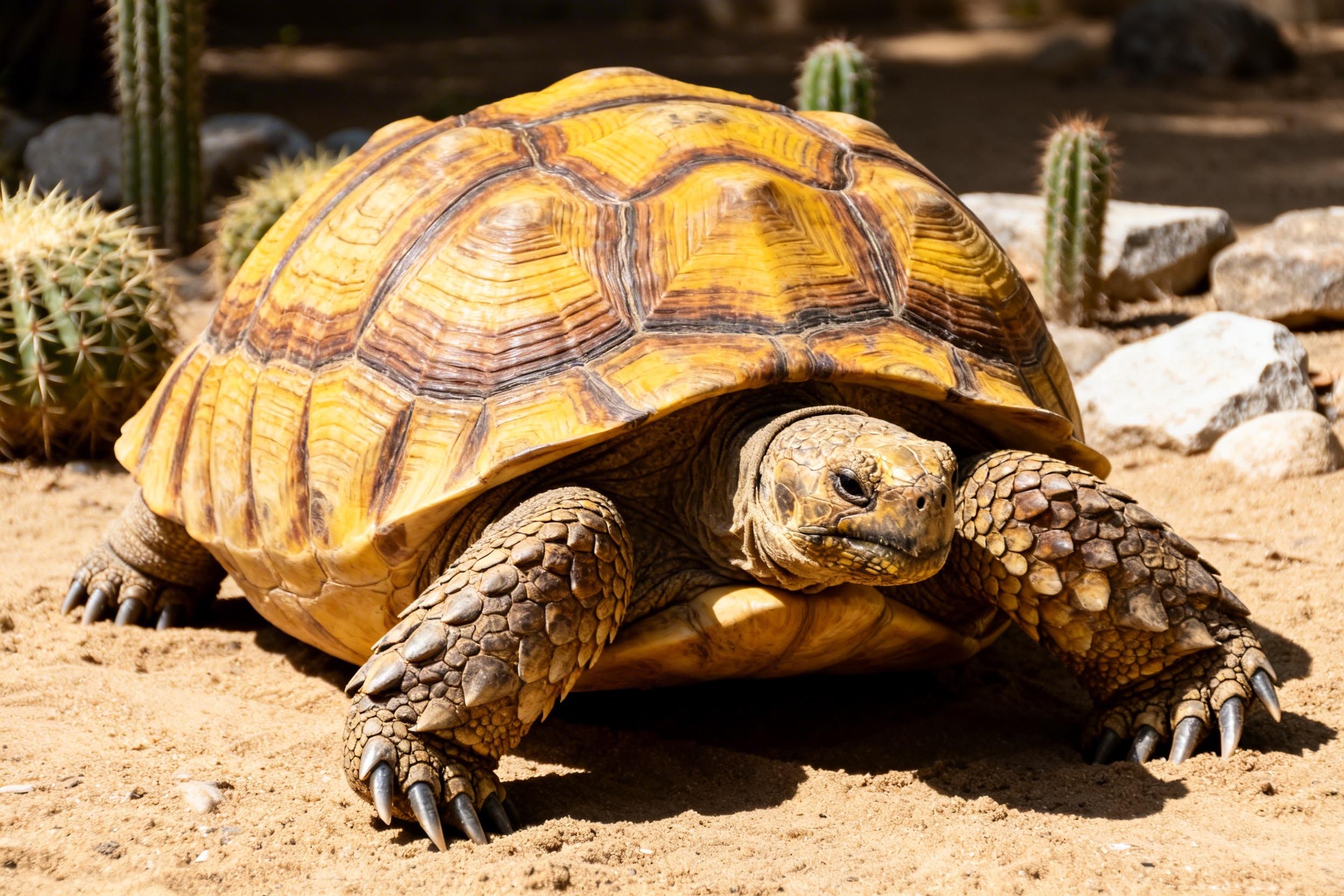
Tortoises have high, domed shells. Land predators (and the occasional falling rock) attack from above. A tall dome is harder to bite through. It also provides more space for the lungs and gives tortoises more leverage when they need to right themselves after flipping over.
One consequence of this: tortoise shells are heavier. Combined with their column-like legs, that weight makes them sink in water — which is why a tortoise that falls into deep water can drown.
Feet: Webbed vs Column-Like
The feet are the second clue, and often the fastest way to tell the two apart.
Turtles have either webbed feet (for freshwater species) or flippers (for sea turtles). The webbing increases surface area for paddling — exactly what you need in water.
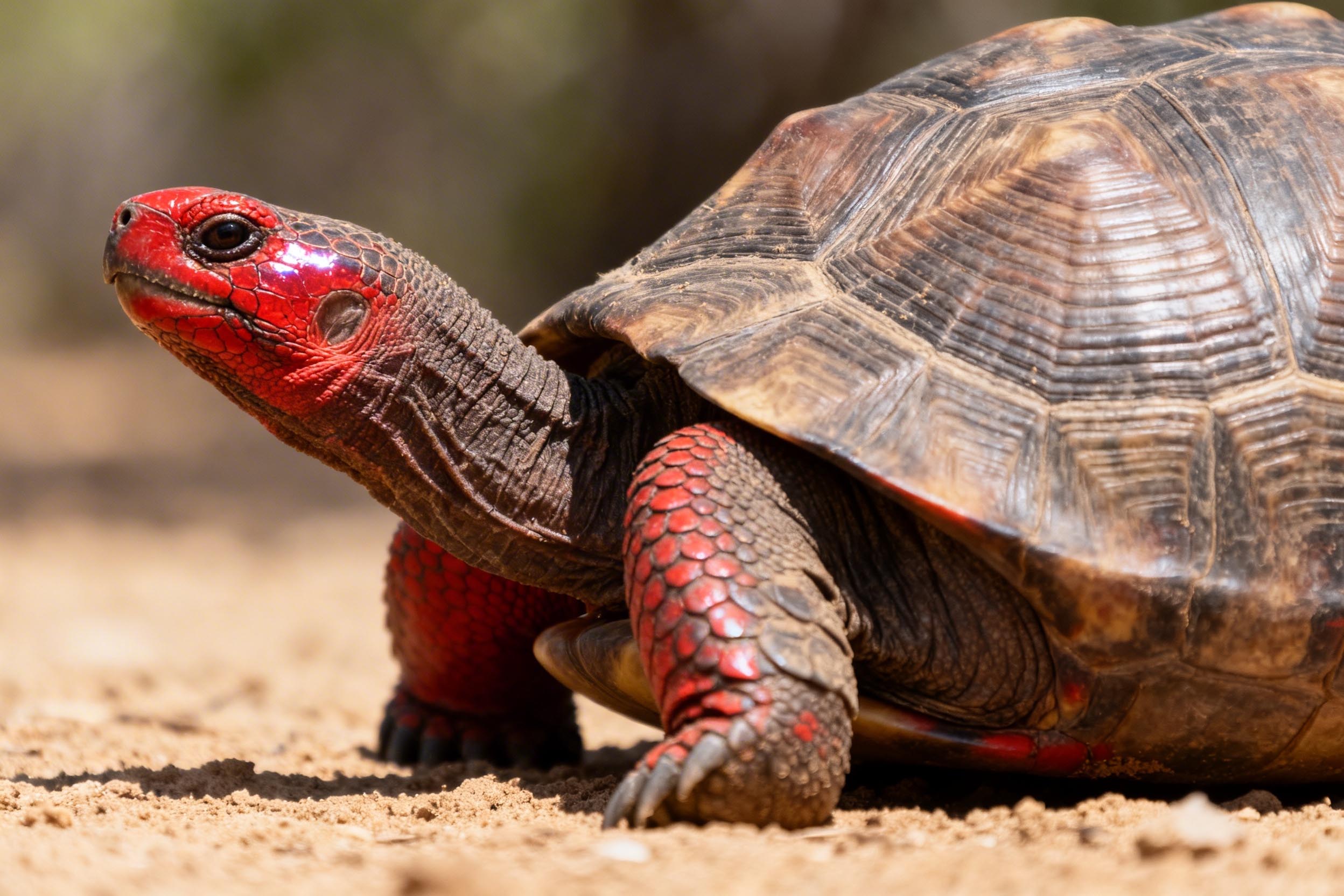
Tortoises have sturdy, column-shaped legs with thick claws and no webbing. These legs are built for walking on rough ground, digging burrows, and supporting the animal's weight during slow, deliberate movement. They are not built for swimming.
Diet: Omnivore vs Herbivore
Diet follows habitat. Turtles eat a mix of animal and plant matter; tortoises eat almost exclusively plants.
- Turtles: fish, insects, worms, snails, aquatic plants, and commercial pellets. Juveniles lean carnivorous; adults shift toward plant matter.
- Tortoises: grasses, hay, leafy greens, occasional fruit. Protein should be minimal — too much causes shell deformities and organ damage.
If you feed a tortoise like a turtle (with lots of protein), it will develop serious health problems. If you feed a turtle like a tortoise (all greens), it will become malnourished. This is one of the most common beginner mistakes.
Habitat: Water vs Land
Habitat is the defining difference, and everything else follows from it.
- Turtles spend most of their lives in or near water. Even semi-aquatic species like box turtles need access to shallow water for drinking and soaking. Aquatic turtles need a full water setup with a basking area.
- Tortoises live entirely on land. They need dry substrate, a basking spot, and a shallow water dish for drinking and soaking — but never deep water.
If you are setting up a habitat, this distinction is critical. Tortoises need a dry, land-based enclosure. Turtles need a water tank with a basking platform. Putting a tortoise in a turtle tank will kill it.
How to Tell Which One You Have
Three quick checks:
- Look at the feet. Webbed feet or flippers → turtle. Column-like, clawed feet → tortoise.
- Look at the shell. Flat, smooth, hydrodynamic → turtle. High-domed, heavy → tortoise.
- Watch behavior. Spends most of its time in water → turtle. Lives entirely on land, never enters water except to drink → tortoise.
If you are still unsure, look up the species name. A quick search for the scientific name will tell you exactly which family it belongs to.
Frequently Asked Questions
What is the difference between a turtle and a tortoise?
The main differences: turtles live mostly in water (or visit water regularly) and have flatter, streamlined shells and webbed feet or flippers; tortoises live entirely on land and have high-domed shells and column-like feet with no webbing. Turtles are usually omnivores; tortoises are almost always herbivores.
Are turtles and tortoises the same species?
They belong to the same order, Testudines, but are different families. Tortoises belong to the family Testudinidae. Turtles is a broader term that covers many families including sea turtles (Cheloniidae), snapping turtles (Chelydridae), and pond turtles (Geoemydidae). So all tortoises are turtles in the scientific sense, but not all turtles are tortoises.
Can tortoises swim?
Most tortoises cannot swim. Their heavy, high-domed shells and column-shaped legs make them sink. A tortoise that falls into deep water can drown within minutes. They need shallow water dishes for drinking and soaking only — never deep water.
Do turtles and tortoises both have shells?
Yes. Every species in the order Testudines has a shell made of fused bone covered by keratin scutes. The difference is shape: aquatic turtles have flatter, more hydrodynamic shells; tortoises have high-domed, heavy shells that offer more protection but no swimming ability.
How can I tell if I have a turtle or a tortoise?
Three quick checks: (1) Look at the feet — webbed feet or flippers mean turtle; column-like, clawed feet with no webbing mean tortoise. (2) Look at the shell — flat and streamlined means turtle; high-domed and heavy means tortoise. (3) Watch behavior — if it spends most time in water, it is a turtle; if it lives entirely on land and never swims, it is a tortoise.
Final Thoughts
Turtle vs tortoise is not just a naming quirk — it reflects two completely different survival strategies. Turtles went into the water and evolved for swimming. Tortoises stayed on land and evolved for digging and defense. Both belong to the same ancient lineage, but they lead opposite lives.
If you are choosing a pet, the distinction matters enormously. A turtle needs a water tank; a tortoise needs a dry enclosure. Feed them the wrong diet and they will get sick. Knowing which one you have is the first step in caring for it properly.
Sources & References
- Ernst, C. H., & Lovich, J. E. (2009). Turtles of the United States and Canada (2nd ed.). Johns Hopkins University Press.
- Bonin, F., Devaux, B., & Dupré, A. (2006). Turtles of the World. Johns Hopkins University Press.
- Pough, F. H., Janis, C. M., & Heiser, J. B. (2013). Vertebrate Life (9th ed.). Pearson.
- Merck Veterinary Manual. Management and Husbandry of Reptiles. Retrieved 2026.