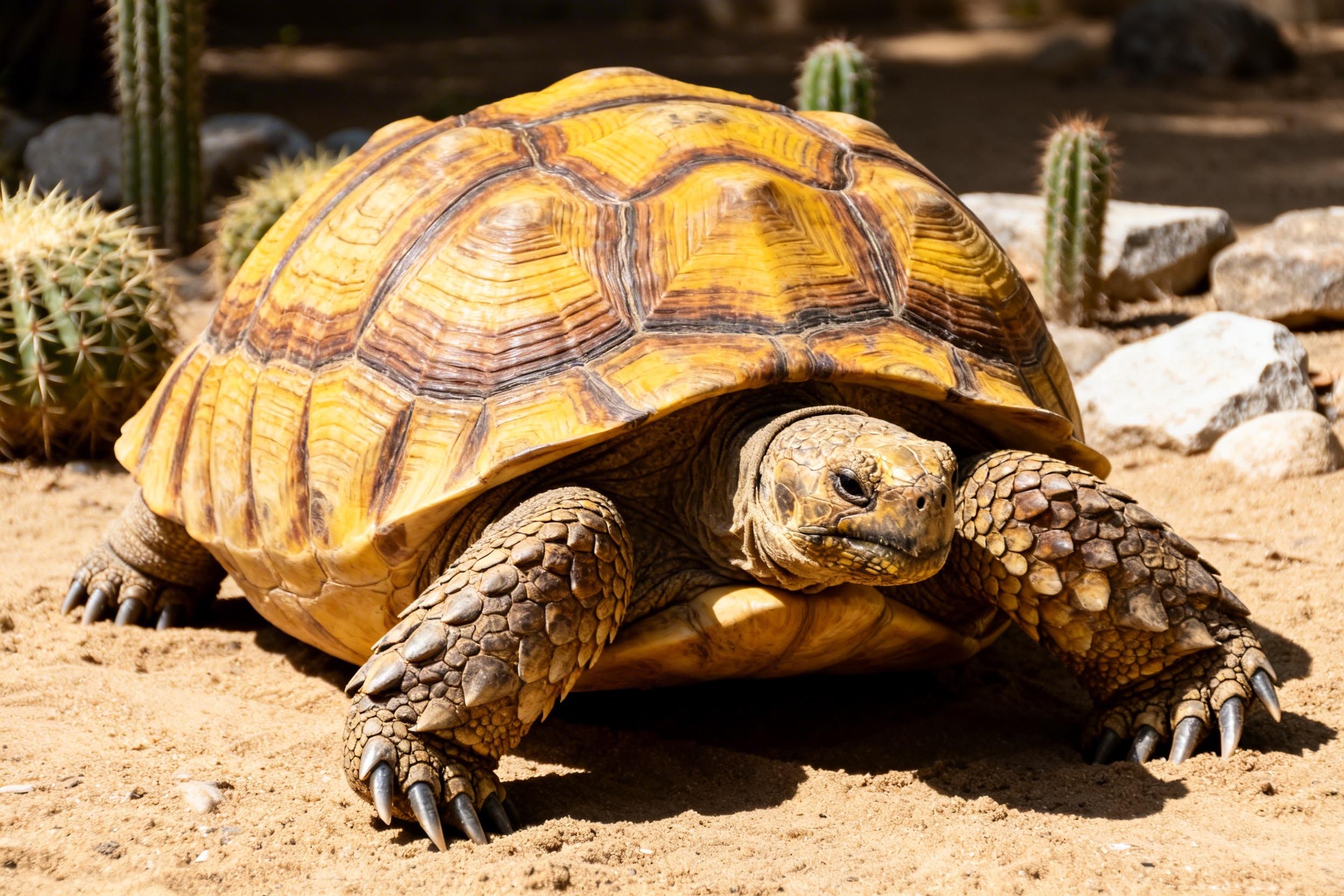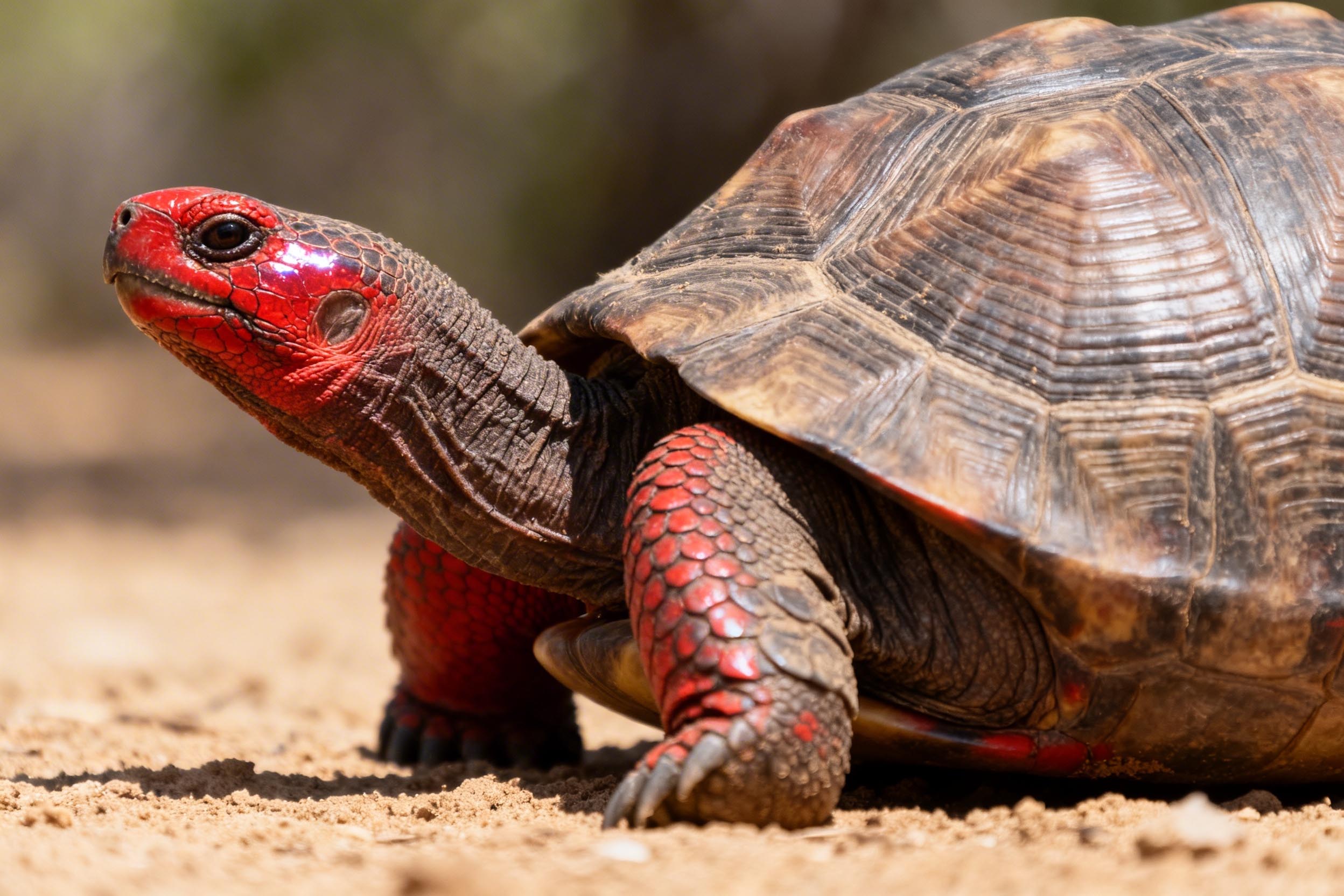
The red-footed tortoise (Chelonoidis carbonarius) is one of South America's most popular pet tortoises, known for the vivid red scales on its legs and its outgoing, interactive personality. It is also one of the most frequently mis-kept tortoises, because many new owners treat it like a desert species — which it is not.
This guide covers the questions that actually matter: how long it lives, what it eats, and whether it is a realistic choice for a beginner keeper.
Species Overview
Red-footed tortoises are native to the tropical rainforests, savannas, and forest edges of South America — from Panama down through Brazil and into northern Argentina. They thrive in warm, humid environments with dense vegetation, not in arid deserts.
| Attribute | Detail |
|---|---|
| Scientific name | Chelonoidis carbonarius |
| Common name | Red-footed tortoise |
| Adult size | 30–40 cm (12–16 in) carapace length |
| Weight | 10–15 kg (22–33 lb) |
| Lifespan | 50+ years (up to 70 in good care) |
| Diet | Omnivore-leaning herbivore |
| Minimum enclosure | 120 × 60 cm (4 × 2 ft) |
| Daytime temperature | 28–32°C (82–90°F), basking 33–35°C (91–95°F) |
| Night temperature | Not below 24°C (75°F) |
| Humidity | 70–80% |
| UVB requirement | Essential, 5.0 or 10.0, 10–12 hrs daily |
The most distinctive feature is the bright red or orange scales on the front legs and head. The carapace is usually dark brown or black with lighter yellowish centers on each scute. Males are typically larger than females and have a concave plastron.
Lifespan and Key Factors
Red-footed tortoises commonly live 50 years or more, and well-cared-for individuals can reach 60 to 70. This is a multi-generational commitment — think carefully before buying.
Three factors have the biggest influence on lifespan:
- Humidity control. Red-footed tortoises come from rainforests and need 70–80% humidity. Long-term dryness leads to pyramiding, difficulty shedding, and respiratory infections. This is the single biggest killer of captive red-footeds.
- Diet variety. They are not strict herbivores. A leafy-greens-only diet causes malnutrition; too much protein stresses the kidneys. Balance matters.
- Temperature stability. Tropical tortoises cannot hibernate. Winter heating is mandatory. A single cold exposure can trigger pneumonia.
Get these three right and your tortoise has an excellent chance at a 50-year life.
Complete Diet List (Feed / Limit / Never Feed)
Red-footed tortoises are omnivorous-leaning herbivores. In the wild, they eat fallen fruit, leaves, flowers, fungi, insects, and occasionally carrion. In captivity, aim for the ratios below.
Staples (80%)
- Dark leafy greens: romaine, collard greens, dandelion greens, plantain
- Grasses: timothy, orchard grass, Bermuda grass
- Mulberry leaves (a favourite)
- Edible wild plants: clover, dandelion
Vegetables and fruit (15%)
- Squash, carrot, bell pepper (grated or chopped)
- Fruit: papaya, mango, strawberry, blueberry — 1–2 times per week, small portions
- Banana: very sparingly (high sugar)
Protein (5%)
- Boiled egg (once per week)
- Earthworms, mealworms (small amounts)
- Low-fat cat food (once per week for juveniles)
Supplements
- Calcium with D3: dust food 2–3 times per week
- Multivitamin: once per week
Never feed
- High-oxalate vegetables: spinach, beet greens (block calcium absorption)
- High-starch foods: potato, corn, rice
- Processed human food, dairy, chocolate
- Avocado (toxic to reptiles)
Is It a Good Beginner Tortoise?
Honest answer: medium difficulty. It is not the easiest first tortoise, but it is not advanced either.
Pros for beginners:
- Outgoing, interactive, and food-motivated
- Broad diet, less picky than some species
- Slightly more tolerant of temperature variation than desert species
- Does not hibernate — one less thing to manage
Cons for beginners:
- Requires high humidity — the most common beginner failure point
- Needs varied diet, not just pellets
- Sensitive to humidity swings; daily misting and monitoring required
- Cannot hibernate; winter heating costs are real
If you can commit to daily misting, diet research, and year-round heating, a red-footed tortoise will be a fascinating pet. If you want something simpler, a Hermann's tortoise is a better first choice — see our Sulcata vs Hermann's comparison.
Enclosure Parameters
These parameters come from published care guides and veterinary references. Adjust based on your individual tortoise's response.
- Temperature: 28–32°C (82–90°F) daytime, 33–35°C (91–95°F) basking spot, never below 24°C (75°F) at night. Use a ceramic heat emitter or heat mat with a thermostat.
- Humidity: 70–80%. Mist 1–2 times daily, provide a humid hide with damp moss, use moisture-retaining substrate (coconut coir, cypress mulch).
- Substrate: Coconut coir + cypress mulch mix, 5–10 cm deep. Avoid sand (impaction risk) and pure wood shavings (mold risk).
- Space: Minimum 120 × 60 cm; larger is always better. Adults are active and need room to roam.
- Lighting: UVB bulb (5.0 or 10.0) on for 10–12 hours daily, mounted 25–35 cm above the shell. Pair with a basking lamp.
- Water dish: Shallow, for drinking and soaking. Refresh daily.
- Hides: At least two (cool side and warm side), with damp moss inside.
Three Most Common Beginner Mistakes
Mistake 1: Treating it like a desert tortoise. This is the most dangerous error. Sulcata and leopard tortoises are desert-adapted and need dry conditions. Red-footed tortoises are rainforest animals and need high humidity. Keeping a red-footed dry leads to pyramiding, shedding problems, and respiratory disease within months. Read the species' natural habitat first.
Mistake 2: Feeding only pellets or only greens. Red-footed tortoises need variety. Pellets alone lack fiber; greens alone lack protein and certain vitamins. Papaya, mango, boiled egg, earthworms — these should all appear on the menu in rotation.
Mistake 3: Skipping winter heating, hoping it will "hibernate naturally." Red-footed tortoises are tropical and have no hibernation mechanism. Skipping heat in winter causes pneumonia, refusal to eat, and often death. Unlike Hermann's tortoises, they cannot overwinter cold. This is basic species biology.
Avoid these three mistakes and your red-footed tortoise is already ahead of most captive individuals.
Frequently Asked Questions
How long do red-footed tortoises live?
Red-footed tortoises commonly live 50+ years in captivity, and well-cared-for individuals can reach 60 to 70 years. This is a multi-generational commitment, not a short-term pet. Plan for it before you buy.
What do red-footed tortoises eat?
Mostly high-fiber plant matter (80%): dark leafy greens, grasses, mulberry leaves. Some vegetables and fruit (15%): squash, carrot, papaya, mango. Occasional protein (5%): boiled egg, earthworms. Supplement calcium with D3 two to three times per week. Avoid high-oxalate vegetables (spinach, beet greens) and processed human food.
Are red-footed tortoises good for beginners?
Medium difficulty. They are not the best first tortoise. They need high humidity, a varied diet, and cannot hibernate. Keepers who are willing to adjust humidity daily and research diet will do well. If you want something simpler, a Hermann's tortoise is a better first choice.
Do red-footed tortoises hibernate?
No. Red-footed tortoises come from the tropical rainforests of South America and do not hibernate. They must be kept warm year-round, with ambient temperatures never dropping below 24°C (75°F). A single cold exposure can trigger pneumonia.
How big do red-footed tortoises get?
Adults reach 30 to 40 cm (12 to 16 inches) in carapace length and 10 to 15 kg (22 to 33 lb) in weight. Minimum enclosure size is 120 × 60 cm; larger is strongly recommended.
Final Thoughts
The red-footed tortoise is a rewarding species for keepers who understand its tropical origins. It is outgoing, long-lived, and full of personality — but it is not a "set it and forget it" pet. Humidity, diet variety, and year-round heating are non-negotiable. Get those right and you will have a companion for decades.
Sources & References
- Highfield, A. C. (2000). Practical Encyclopedia of Keeping and Breeding Tortoises and Freshwater Turtles. Carapace Press.
- Bonin, F., Devaux, B., & Dupré, A. (2006). Turtles of the World. Johns Hopkins University Press.
- Merck Veterinary Manual. Management and Husbandry of Reptiles. Retrieved 2026.
- Association of Reptilian and Amphibian Veterinarians (ARAV). Care sheets for tortoises. Retrieved 2026.