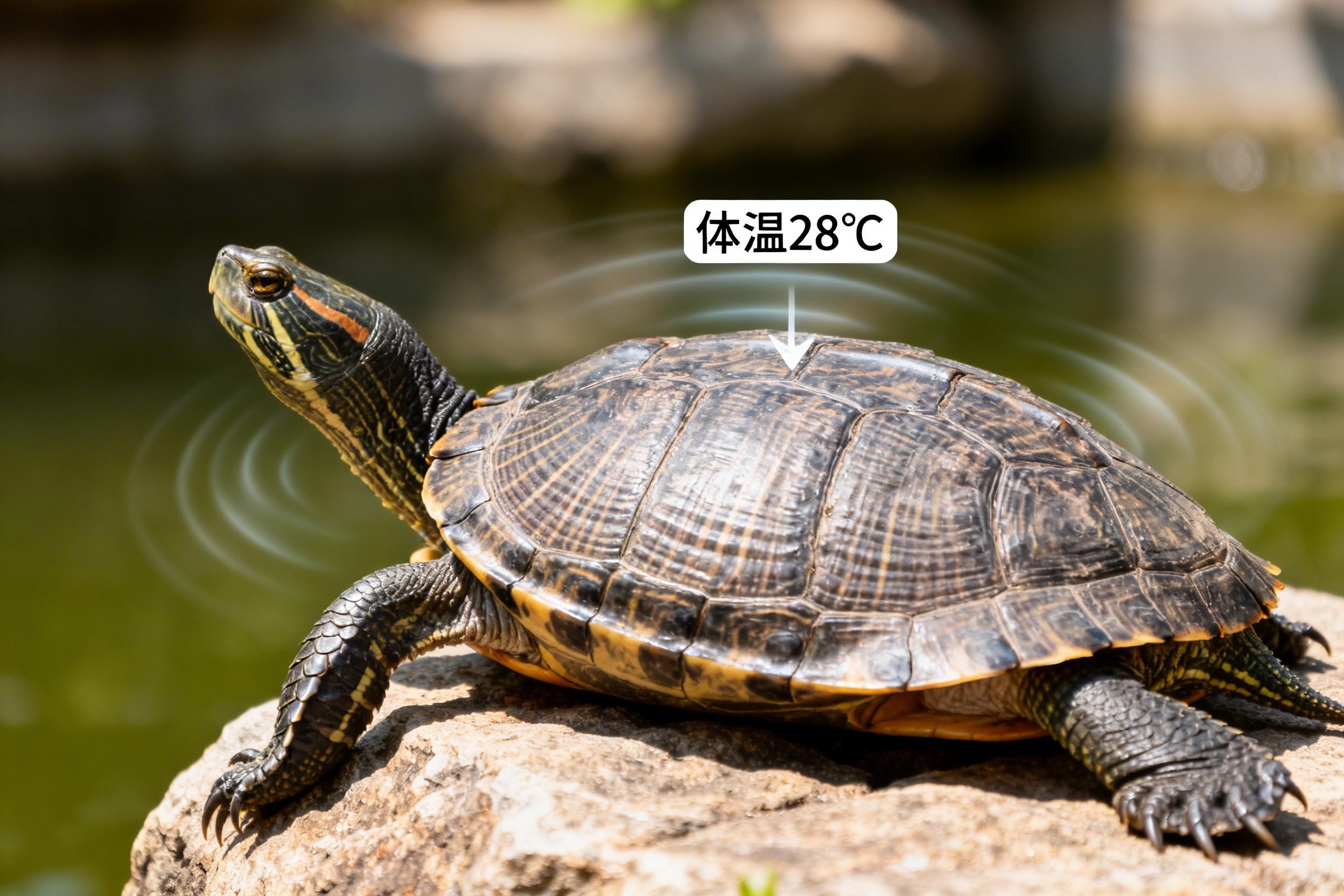
Turtles are masters of hiding illness. In the wild, showing weakness makes an animal a target for predators. So a sick turtle will often look perfectly normal until the illness is advanced — sometimes until it is too late.
This is why daily observation matters. The 10 signs below are the most reliable early indicators of illness in captive turtles. Any one of them is a reason to act.
The 10 Signs
1. Refusing food. A turtle that suddenly stops eating is telling you something is wrong. Check the water temperature first — below 24°C, a turtle may simply be too cold to eat. If the temperature is correct and the turtle has not eaten for 3 days, it is a medical concern.
2. Lethargy. A healthy turtle is active, curious, and responsive. A sick turtle sits in one spot, does not react to your presence, and does not move around the tank. Lethargy is one of the earliest and most reliable signs of illness.
3. Open-mouth breathing. A healthy turtle breathes with its mouth closed. Open-mouth breathing is the classic sign of respiratory infection and is one of the most urgent symptoms. See our respiratory infection guide.
4. Nasal discharge. Bubbles, clear fluid, or white discharge around the nostrils. This is a strong indicator of respiratory infection.
5. Floating tilted. If a turtle floats with one side higher than the other, or cannot submerge, one lung may be filled with fluid. This is a serious sign of pneumonia.
6. Swollen or closed eyes. Swollen eyelids, cloudy eyes, or a turtle that keeps its eyes closed are signs of eye infection or vitamin A deficiency. See our eye infection guide.
7. Soft or deformed shell. A shell that flexes when pressed, or that looks uneven or deformed, is a sign of metabolic bone disease. See our MBD guide.
8. Shell discoloration or odor. White or grey patches, soft spots, or a foul smell on the shell are signs of shell rot. See our shell rot guide.
9. Unusual swimming. A turtle that lists, spins, or swims abnormally may have a buoyancy problem or a neurological issue. This is always a reason to investigate.
10. Hiding constantly. A turtle that suddenly starts hiding all the time — or that stays on the basking platform and refuses to enter the water — is telling you something is wrong.
What to Do First
If you spot any of these signs, act quickly. The first steps are almost always the same:
1. Check the environment. Before assuming illness, verify that your setup is correct:
- Water temperature: 24–28°C for most species
- Basking temperature: 30–35°C
- UVB bulb: fresh (replaced within 6–12 months)
- Water quality: clean, ammonia and nitrite zero
- Filtration: working properly
2. Isolate the turtle. Move the sick turtle to a quiet hospital tank with clean, warm water. Reduce handling to a minimum.
3. Raise the temperature. For most illnesses, raising the water to 28–30°C supports the immune system. Do not exceed 30°C.
4. Contact a vet. If the symptoms do not improve within 24–48 hours, or if the turtle is showing severe signs (open-mouth breathing, floating tilted, refusal to eat for 3+ days), contact an exotic animal vet immediately.
5. Do not medicate blindly. Avoid the temptation to throw antibiotics at the problem without a diagnosis. Incorrect medication can mask symptoms, cause resistance, or harm the turtle further.
Prevention: The Daily Check
The best way to catch illness early is to check your turtle daily. It takes 30 seconds and can save your turtle's life.
Daily check:
- Eyes: bright and open?
- Nostrils: clean and dry?
- Shell: hard, smooth, no new patches?
- Skin: no cuts, no white patches?
- Behavior: active, basking normally, swimming normally?
- Appetite: eating normally?
- Feces: solid, well-formed?
Weekly check:
- Weigh the turtle and track changes
- Check water parameters (ammonia, nitrite, nitrate, pH)
- Inspect the UVB bulb and basking area
Frequently Asked Questions
How do I know if my turtle is sick?
The 10 most important signs of illness in turtles are: refusing food, lethargy, open-mouth breathing, nasal discharge, floating tilted, swollen or closed eyes, soft shell, shell discoloration, unusual swimming, and hiding constantly. Any one of these signs is a reason to act.
Why do turtles hide illness?
In the wild, showing weakness makes an animal a target for predators. Turtles have evolved to mask symptoms until they can no longer function. By the time a turtle looks visibly sick, the illness is often advanced. This is why daily observation is critical.
What should I do if my turtle won't eat?
First, check the water temperature. If it is below 24°C, the turtle may simply be too cold to eat. Check the UVB bulb and basking area. If the environment is correct and the turtle has not eaten for more than 3 days, contact a reptile vet.
What are the most common turtle diseases?
The most common turtle diseases are respiratory infection (pneumonia), shell rot, metabolic bone disease, eye infection, and intestinal parasites. All of these are almost always caused by husbandry problems — dirty water, wrong temperature, missing UVB, or poor diet.
How often should I check my turtle for signs of illness?
Check your turtle daily. Look at the eyes, nostrils, shell, skin, and behavior. Weigh the turtle monthly to track weight. Early detection makes treatment much easier and more likely to succeed.
Final Thoughts
Turtles are stoic animals, and they will not tell you when something is wrong. It is your job to notice. A 30-second daily check is the single most effective tool for keeping your turtle healthy and catching problems before they become emergencies.
For more on turtle health, see our respiratory infection guide, our shell rot guide, and our eye infection guide.
Sources & References
- Mader, D. R. (2005). Reptile Medicine and Surgery (2nd ed.). Saunders Elsevier.
- Carpenter, J. W. (2013). Exotic Animal Formulary (4th ed.). Elsevier Saunders.
- Merck Veterinary Manual. Diseases of Reptiles. Retrieved 2026.
- VCA Hospitals. Common Diseases of Aquatic Turtles. Retrieved 2026.
- Association of Reptilian and Amphibian Veterinarians (ARAV). Clinical signs of illness in chelonians. Retrieved 2026.