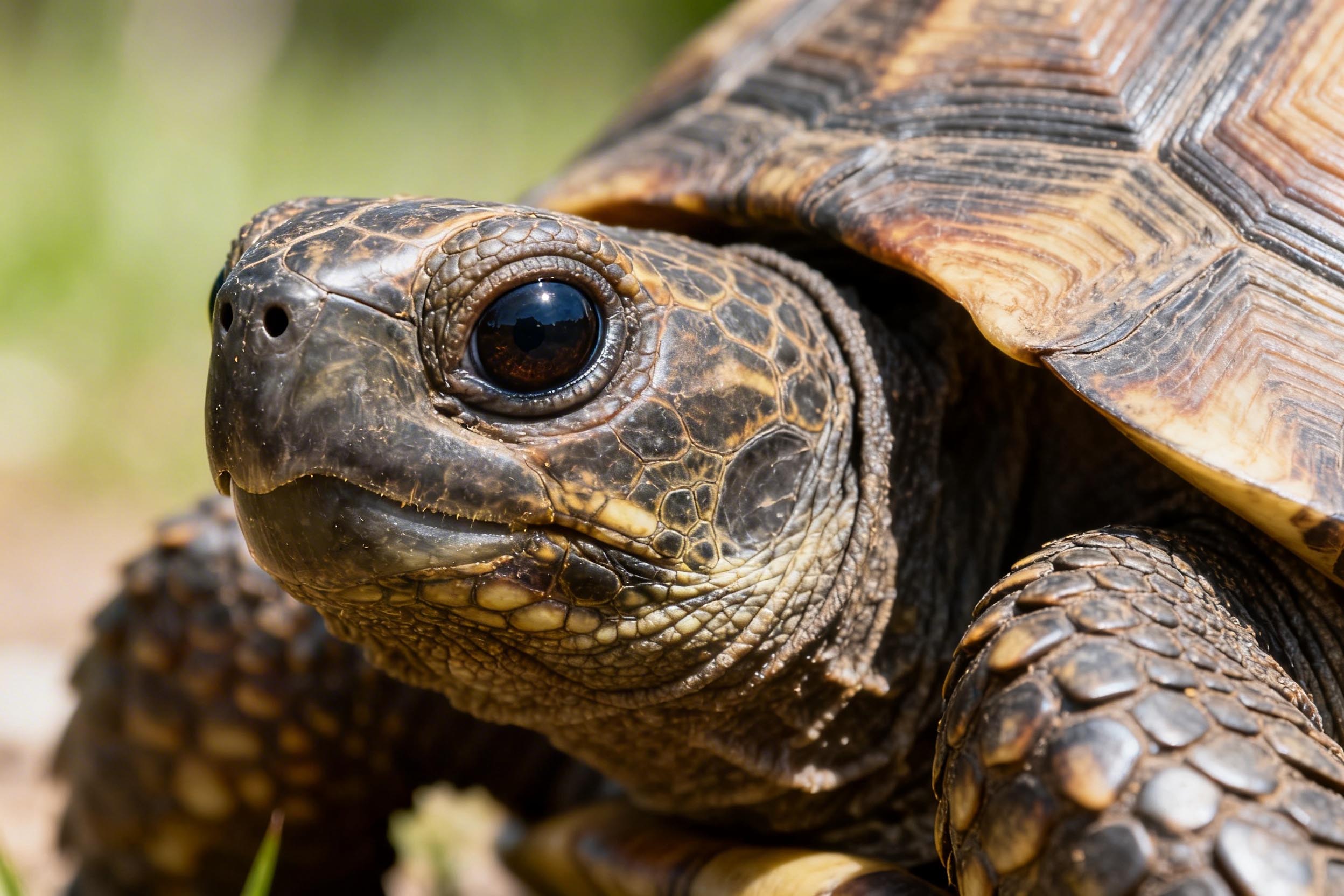
If your turtle's eye looks swollen, cloudy, or stuck shut, it is probably an eye infection. Eye infections are one of the most common health problems in captive turtles — and one of the easiest to treat if you catch them early.
This guide covers the symptoms, the most common causes, and what you can do at home before deciding to see a vet.
Symptoms of a Turtle Eye Infection
- Cloudy or white film over the eye
- Swollen eyelid, sometimes so puffy the eye cannot open
- Yellow or white discharge around the eye
- Frequent rubbing of the eye against tank surfaces
- One or both eyes stay closed even when awake
- Reduced appetite or refusal to eat
- Lethargy, spending more time on the basking platform
Common Causes
1. Poor water quality
This is the most common cause. Bacteria multiply quickly in dirty water, and the eye — moist and exposed — is one of the first places infection takes hold.
2. Vitamin A deficiency
A diet missing vitamin A weakens the eyelids and tear ducts. This is more common in turtles fed only raw meat or low-quality pellets.
3. Physical injury
A small scratch from tank walls, filters, or tankmates can become infected in dirty water.
4. Low water temperature
Cold water slows the immune system. Most turtles need 75-80°F (24-27°C). If the water is too cold, minor infections get worse fast.
Home Treatment Steps
- Isolate the turtle. Move it to a clean hospital tank with shallow, warm water.
- Fix the water. Do a 50% water change, clean the filter, and check the temperature. Test ammonia and nitrite — both should be zero.
- Raise the temperature slightly. Aim for 78-80°F (25-27°C).
- Apply a turtle-safe antibiotic eye drop. Use products made for reptiles, not human eye drops. Apply 2-3 times a day.
- Support nutrition. Offer vitamin A-rich foods: liver, carrots, dark leafy greens, or a quality commercial pellet.
- Keep the tank clean. Change 30% of the water every 2-3 days during treatment.
When to See a Vet
- The eye is bleeding or has a deep wound
- The swelling is severe enough that the eye cannot open at all
- The turtle has not eaten for 3+ days
- There is thick yellow or green discharge
- Both eyes are affected and getting worse despite treatment
For species-specific guidance on snapping turtles, see our Snapping Turtle White Eye Disease guide.
Prevention
- Use a strong filter. A canister filter rated for 2-3x your tank volume is the minimum.
- Change water weekly. Replace 20-30% of the water every week.
- Keep the temperature stable. 75-80°F (24-27°C) for most species.
- Feed a balanced diet. Mix quality pellets, leafy greens, and occasional liver or fish.
- Provide UVB lighting. See our UVB guide.
FAQ
What causes turtle eye infections?
The most common cause is poor water quality. Other causes include vitamin A deficiency, physical injury, and low water temperature.
Can I treat a turtle eye infection at home?
In mild cases, yes. Improve water quality, increase water temperature slightly, and apply a turtle-safe antibiotic eye drop. If the eye is severely swollen, bleeding, or the turtle is not eating, see a vet.
How long does a turtle eye infection take to heal?
With early treatment, mild cases often improve within 1-2 weeks. More severe infections may take 3-4 weeks.
When should I see a vet for a turtle eye infection?
See a vet if the eye is bleeding, severely swollen, has thick yellow or green discharge, or the turtle has stopped eating for more than 3 days.