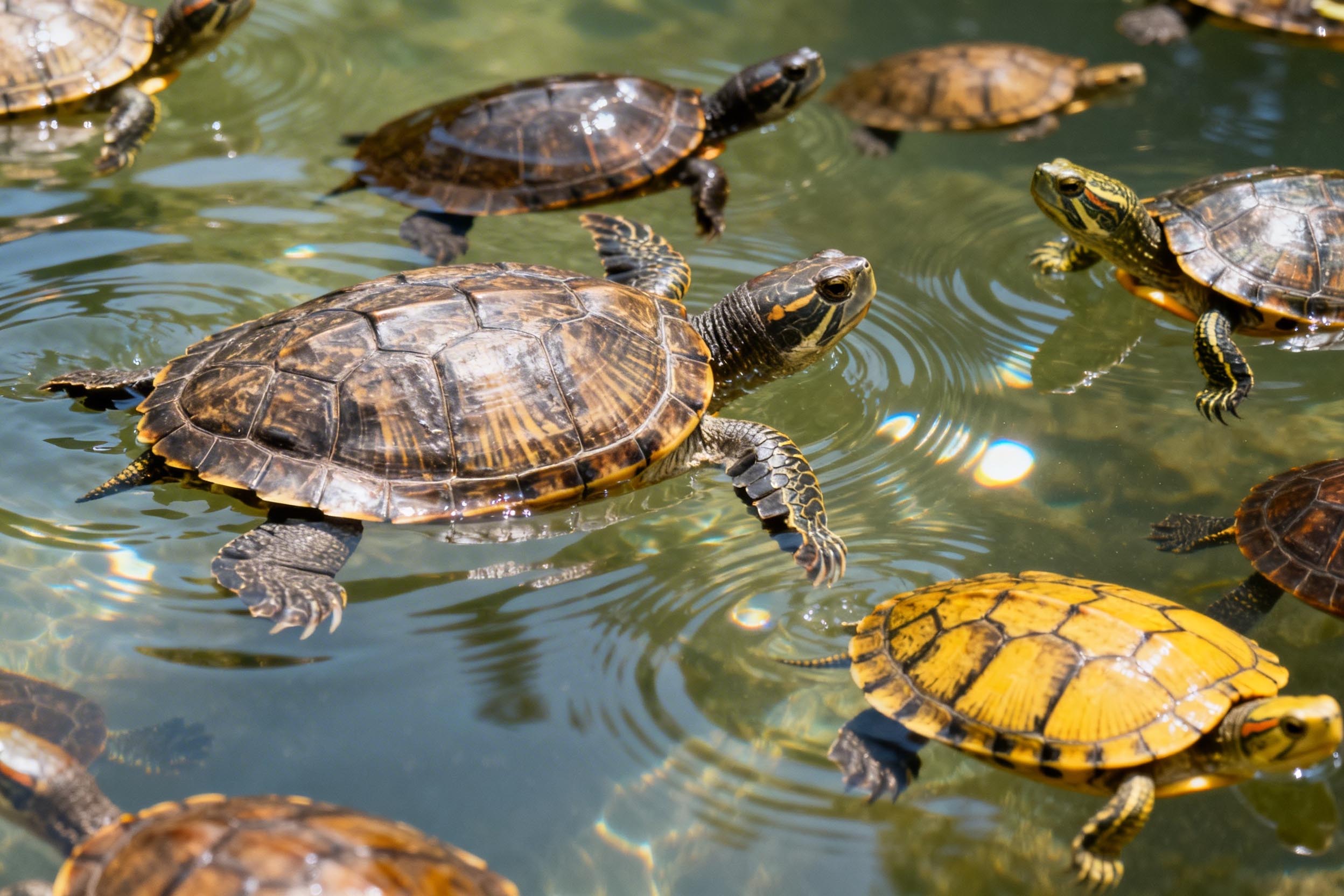
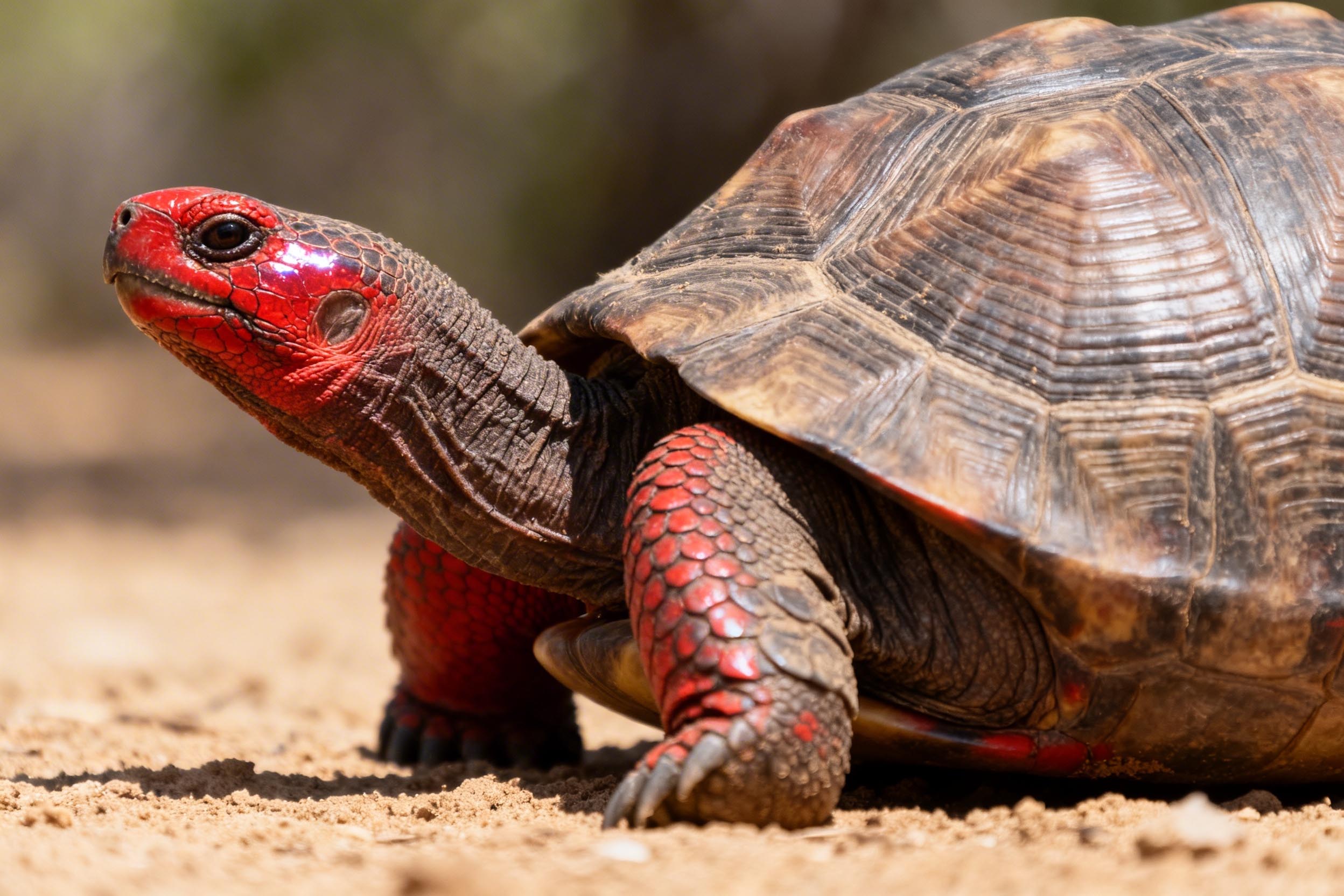
How long do turtles live? Short answer: much longer than most people expect. Small pet turtles commonly reach 20 to 50 years. Tortoises can hit 80 to 150 years. And the oldest verified individual lived to 188.
This matters because turtles are frequently bought as "starter pets" by people who have no idea they are signing up for a multi-decade commitment. This guide breaks down lifespans by species, what affects them, and what you can do to help yours reach its full potential.
Lifespan by Species (Complete Table)
| Species | Type | Typical Lifespan |
|---|---|---|
| Musk turtle | Aquatic | 30–50 years |
| Red-eared slider | Aquatic | 20–40 years |
| Painted turtle | Aquatic | 25–30 years |
| Map turtle | Aquatic | 20–30 years |
| Chinese pond turtle | Semi-aquatic | 20–30 years |
| Box turtle | Semi-aquatic | 40–60 years |
| Snapping turtle | Aquatic | 30–50 years |
| Sea turtle (various) | Marine | 50–80 years |
| Hermann's tortoise | Tortoise | 50–80 years |
| Russian tortoise | Tortoise | 50–80 years |
| Red-footed tortoise | Tortoise | 50–70 years |
| Sulcata tortoise | Tortoise | 70–100 years |
| Leopard tortoise | Tortoise | 80–100 years |
| Galápagos tortoise | Giant tortoise | 100–150+ years |
| Aldabra tortoise | Giant tortoise | 100–150+ years |
Common Pet Turtle Lifespans
Red-eared slider (20–40 years). The most common pet turtle worldwide. Hardy and forgiving, but most die before 20 because of poor husbandry — dirty water, no UVB, or temperature swings. Give it a proper setup and it will likely reach 30.
Musk turtle (30–50 years). Small, hardy, long-lived. A well-cared-for musk turtle can outlive its owner. Their small size (8–12 cm) makes them ideal for apartment keepers, but "small" does not mean "short-lived."
Painted turtle (25–30 years). Slightly shorter-lived than sliders. Peaceful and attractive. Needs clean, cool water and a good filter.
Box turtle (40–60 years). One of the longest-lived common pet turtles. Semi-aquatic. Some individuals have been documented passing 100 in captivity.
Map turtle (20–30 years). Beautiful patterned shells. More sensitive to water quality than sliders. Not the best first turtle, but rewarding for keepers who keep water pristine.
Tortoise Lifespans
Tortoises are a different category. They are among the longest-lived vertebrates on Earth.
Small tortoises (50–80 years): Hermann's tortoise, Russian tortoise. These are the most beginner-friendly and still a lifetime commitment.
Medium tortoises (70–100 years): Sulcata tortoise, red-footed tortoise, leopard tortoise. These will likely outlive their owners unless rehomed to a younger keeper.
Giant tortoises (100–150+ years): Galápagos and Aldabra tortoises. These are not pets in the traditional sense — they are multi-generational commitments, often cared for by institutions rather than individuals.
Five Factors That Determine Lifespan
1. Genetics (the ceiling). Species determines the upper limit. A musk turtle will not live 100 years; a Galápagos tortoise will not live 30. But genetics only sets the ceiling — how close you get to it is up to husbandry.
2. Diet quality. Malnutrition shortens lifespan dramatically. Too much protein causes kidney and shell problems. Too little calcium causes metabolic bone disease. A varied, species-appropriate diet is one of the highest-leverage things you can control.
3. Water quality and temperature stability. Dirty water causes shell rot, eye infections, and skin disease. Sudden temperature drops cause respiratory infections. Both are leading causes of premature death in captive turtles.
4. UVB lighting. Without UVB, turtles cannot synthesize vitamin D3, cannot absorb calcium, and develop metabolic bone disease. This is slow and painful, and often fatal before age 15.
5. Veterinary care. Regular checkups and prompt treatment of illness make a measurable difference. Turtles hide illness until it is serious — a keeper who recognizes early signs and acts fast gives their turtle years of extra life.
Captive vs Wild Lifespan
Captive turtles often live longer than wild ones. In the wild, turtles face predators, food scarcity, disease, habitat loss, and road mortality. A wild red-eared slider has maybe a 1% chance of reaching old age.
But this is not automatic. Poor husbandry in captivity kills turtles faster than wild life does. Dirty water, missing UVB, incorrect diet, and temperature swings are more dangerous than hawks and raccoons. The result: most captive turtles die before age 20, when they should reach 40.
In other words: captivity is not automatically safer. It is safer only if husbandry is correct.
The Oldest Turtles Ever Recorded
Notable Long-Lived Individuals
- Tu'i Malila (radiated tortoise): given to the Tongan royal family by Captain Cook around 1777, died in 1965 at an estimated 188 years old. The oldest verified turtle in history.
- Jonathan (Seychelles giant tortoise): still alive on St. Helena, estimated at over 190 years old. The oldest living land animal.
- Adwaita (Aldabra tortoise): died in 2006 at an estimated 250 years old. His age is disputed but widely cited.
- Harriet (Galápagos tortoise): reportedly collected by Darwin in 1835, died in 2006 at an estimated 175 years old. DNA testing later confirmed her as a Galápagos tortoise, though the Darwin link is debated.
How to Help Your Turtle Live Longer
Seven concrete things you can do:
- Provide proper UVB. Replace the bulb every 6–12 months, even if it still lights up. Mount at the correct distance from the basking area.
- Maintain stable temperatures. Use a thermostat-controlled heater. Avoid swings over 3°C.
- Filter aggressively. Use a filter rated for twice the tank volume. Change 25–50% of the water weekly.
- Feed a species-appropriate diet. Not just pellets, not just greens. Variety is key.
- Supplement calcium. Two to three times per week for most species.
- Observe daily. Check eyes, nares, shell, appetite, and behavior. Catch problems early.
- See a vet. Find an exotic animal vet before your turtle is sick. A wellness check every 1–2 years catches issues early.
Frequently Asked Questions
How long do pet turtles live?
Common pet turtles live 20 to 50 years. Red-eared sliders: 20-40. Musk turtles: 30-50. Painted turtles: 25-30. Box turtles: 40-60. These are not short-term pets — they can outlive a mortgage.
How long do tortoises live?
Tortoises are among the longest-lived vertebrates on Earth. Small species like Hermann's tortoise: 50-80 years. Medium species like Sulcata: 70-100. Giant tortoises (Galápagos, Aldabra): 100-150+. Some individuals have lived over 180 years.
Do turtles live longer in captivity or in the wild?
Captive turtles often live longer than wild ones because they are protected from predators, starvation, and disease. However, poor husbandry kills captive turtles young — incorrect temperature, dirty water, and missing UVB cause most captive turtle deaths before age 20.
What affects how long a turtle lives?
Five main factors: species genetics (the ceiling), diet quality, water quality and temperature stability, UVB lighting, and veterinary care. Get all five right and a turtle can approach its genetic maximum. Get any one wrong and lifespan drops sharply.
What is the oldest turtle ever recorded?
The oldest verified turtle was Tu'i Malila, a radiated tortoise given to the Tongan royal family by Captain Cook around 1777. She died in 1965 at an estimated age of 188. Jonathan, a Seychelles giant tortoise on St. Helena, is currently estimated at over 190 years old.
Final Thoughts
How long a turtle lives is mostly determined by two things: which species you chose, and how well you care for it. Buy a red-eared slider and you are signing up for 20–40 years. Buy a Sulcata tortoise and you are signing up for 70–100.
Whichever species you choose, treat lifespan as a commitment, not a curiosity. A turtle that reaches 40 years is not lucky — it is well-kept. And a turtle that dies at 5 is not unlucky — it is usually mismanaged.
If you want your turtle to reach its full lifespan, focus on the five factors above. Genetics sets the ceiling; your husbandry determines whether it reaches it.
Sources & References
- Ernst, C. H., & Lovich, J. E. (2009). Turtles of the United States and Canada (2nd ed.). Johns Hopkins University Press.
- Bonin, F., Devaux, B., & Dupré, A. (2006). Turtles of the World. Johns Hopkins University Press.
- Merck Veterinary Manual. Management and Husbandry of Reptiles. Retrieved 2026.
- Association of Reptilian and Amphibian Veterinarians (ARAV). Care sheets for common pet chelonians. Retrieved 2026.
- Guinness World Records. Oldest Turtle. Retrieved 2026.