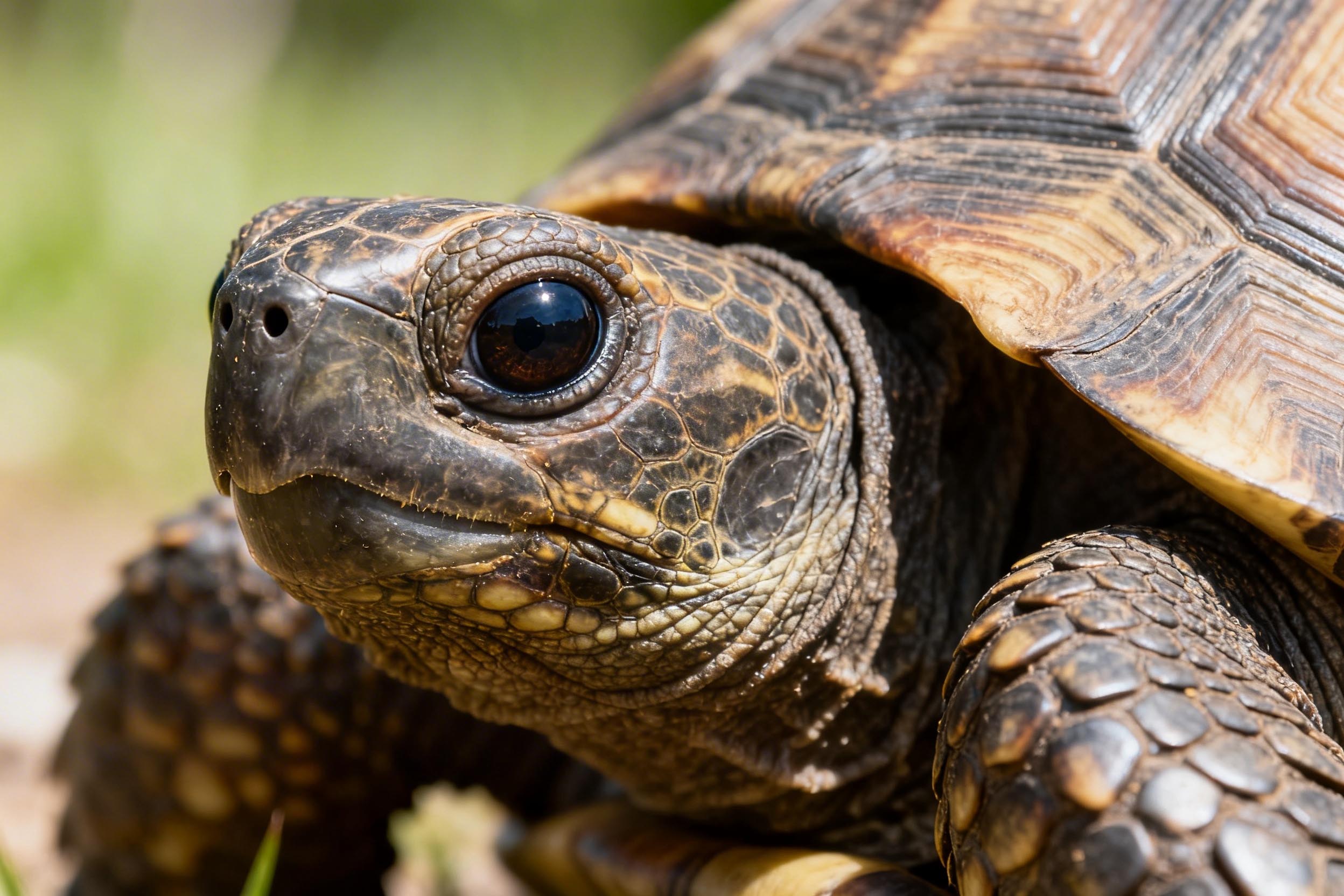
If your snapping turtle's eye looks cloudy, white, or swollen shut, you are probably dealing with white eye disease — one of the most common health problems in captive snapping turtles. It is treatable, but only if you catch it early and fix the underlying cause.
This guide covers the symptoms to look for, the most common causes, how to treat it at home, and the warning signs that mean you need a vet.
Symptoms of White Eye Disease
Snapping turtles are hardy, so early signs are easy to miss. Watch for these:
| Symptom | What it looks like |
|---|---|
| Cloudy or white eye | A milky film over the eye, or the whole eye looks opaque |
| Swollen eyelid | The eyelid is puffy, sometimes so swollen the eye cannot open |
| Discharge | Yellow or white pus around the eye |
| Frequent rubbing | The turtle rubs its eye against tank walls or basking surfaces |
| Closed eye | One or both eyes stay shut even when the turtle is awake |
| Reduced appetite | The turtle eats less or stops eating |
| Lethargy | Less active, stays on the basking platform more than usual |
In snapping turtles specifically, eye problems often go unnoticed because the animal is aggressive and owners avoid close handling. Check the eyes during feeding or while the turtle is basking.
What Causes White Eye Disease in Snapping Turtles
There are four main causes, and they often overlap.
1. Poor water quality (most common)
Snapping turtles produce a lot of waste. Without a strong filter and regular water changes, bacteria multiply fast. The eye — a moist, exposed surface — is one of the first places infection takes hold.
2. Vitamin A deficiency
A diet missing vitamin A weakens the eyelids and tear ducts. This is more common in turtles fed only raw meat or low-quality pellets. A balanced diet with liver, leafy greens, and quality commercial food prevents this.
3. Physical injury
Snapping turtles are aggressive and often injure themselves against tank walls, filters, or tankmates. A small scratch can become infected in dirty water.
4. Low water temperature
Cold water slows the immune system. Most snapping turtles need 75-80°F (24-27°C). If the water is too cold, minor infections get worse fast.
Home Treatment Steps
For mild cases, follow these steps:
- Isolate the turtle. Move it to a clean hospital tank with shallow, warm water.
- Fix the water. In the main tank, do a 50% water change, clean the filter, and check the temperature.
- Raise the temperature slightly. Aim for 78-80°F (25-27°C).
- Apply a turtle-safe antibiotic eye drop. Use products made for reptiles, not human eye drops. Apply 2-3 times a day.
- Support nutrition. Offer vitamin A-rich foods: liver, carrots, dark leafy greens, or a quality commercial pellet.
- Keep the tank clean. Change 30% of the water every 2-3 days during treatment.
Most mild cases improve within 1-2 weeks. If there is no improvement after 7 days, or if the eye gets worse, see a vet.
When to See a Vet
- The eye is bleeding or has a deep wound
- The swelling is severe enough that the eye cannot open at all
- The turtle has not eaten for 3+ days
- There is thick yellow or green discharge
- Both eyes are affected and getting worse despite treatment
- The turtle is gasping, floating sideways, or showing other signs of illness
For a broader overview of eye problems across turtle species, see our Turtle Eye Infection guide.
How to Prevent White Eye Disease
- Use a strong filter. A canister filter rated for 2-3x your tank volume is the minimum.
- Change water weekly. Replace 20-30% of the water every week.
- Keep the temperature stable. 75-80°F (24-27°C) for most species.
- Feed a balanced diet. Mix quality pellets, leafy greens, and occasional liver or fish.
- Provide UVB lighting. See our UVB guide.
- Check eyes weekly. A 10-second look during feeding catches problems early.
Frequently Asked Questions
What causes white eye disease in snapping turtles?
The most common cause is poor water quality. Other causes include vitamin A deficiency, physical injury, and low water temperature.
Can snapping turtle white eye disease be treated at home?
In mild cases, yes. Improve water quality, increase water temperature slightly, and apply a turtle-safe antibiotic eye drop. If the eye is severely swollen, bleeding, or the turtle is not eating, see a vet.
How long does it take for a snapping turtle's eye to heal?
With early treatment, mild cases often improve within 1-2 weeks. More severe infections may take 3-4 weeks.
Is white eye disease contagious to other turtles?
Bacterial eye infections can spread between turtles in the same tank, especially if water quality is poor. Isolate the affected turtle and clean the shared tank thoroughly.
How can I prevent white eye disease in snapping turtles?
Keep water clean with a good filter, change 20-30% of the water weekly, maintain proper temperature (75-80°F / 24-27°C), and provide a balanced diet with enough vitamin A.
Final Thoughts
White eye disease in snapping turtles is common, but it is not a death sentence. In most cases, the fix is simple: clean water, a slightly warmer tank, and a turtle-safe antibiotic eye drop. The key is to catch it early and fix the root cause — usually water quality — so it does not come back.
If your turtle's eye is severely swollen, bleeding, or the animal has stopped eating, do not wait. See a reptile vet.
Sources & References
- Ernst, C. H., & Lovich, J. E. (2009). Turtles of the United States and Canada (2nd ed.). Johns Hopkins University Press.
- Mader, D. R. (2006). Reptile Medicine and Surgery (2nd ed.). Saunders Elsevier.
- Merck Veterinary Manual. Management and Husbandry of Reptiles. Retrieved 2026.
- Boylan, S. (2020). Ophthalmic Diseases of Reptiles. Veterinary Clinics: Exotic Animal Practice.