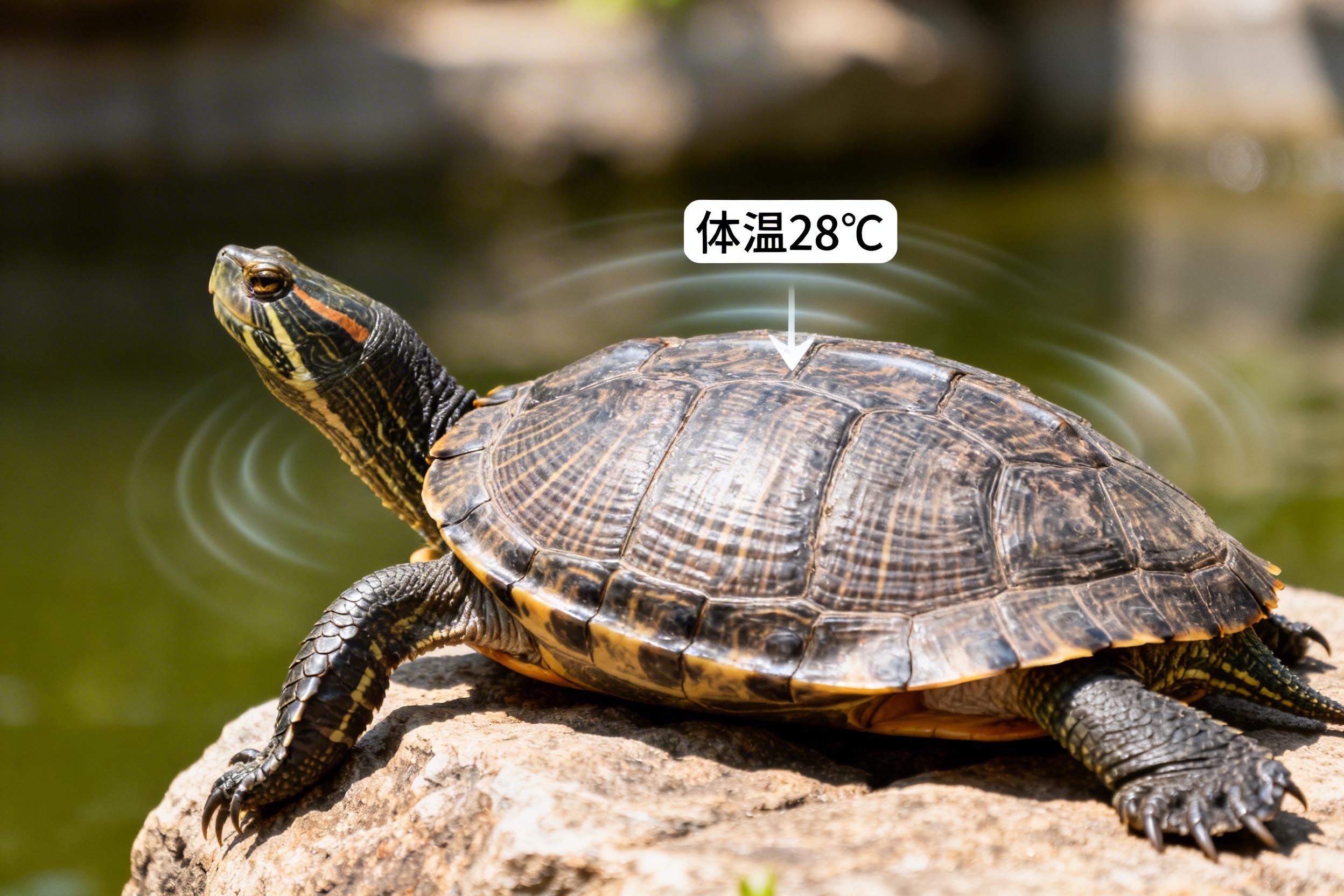
Water temperature is one of the most important — and most often overlooked — factors in turtle care. A turtle kept at the wrong temperature will eat less, digest poorly, and get sick more often. A turtle kept at the right temperature will thrive.
This guide covers the ideal temperature ranges for common species, how to heat the water safely, and the mistakes that lead to temperature-related illness.
Ideal Ranges by Species
| Species | Water Temp | Basking Temp |
|---|---|---|
| Red-eared slider | 24–28°C (75–82°F) | 32–35°C (90–95°F) |
| Painted turtle | 22–26°C (72–79°F) | 30–34°C (86–93°F) |
| Musk turtle | 24–28°C (75–82°F) | 30–32°C (86–90°F) |
| Chinese pond turtle | 24–28°C (75–82°F) | 30–33°C (86–91°F) |
| Cooter | 24–28°C (75–82°F) | 32–35°C (90–95°F) |
| Softshell turtle | 26–30°C (79–86°F) | 32–35°C (90–95°F) |
| Box turtle (semi-aquatic) | Shallow water dish at room temp | 28–30°C (82–86°F) |
These ranges are guidelines, not absolutes. A turtle that is active, eating well, and basking regularly is likely at the right temperature. A turtle that is lethargic, refusing food, or spending all its time on the basking platform may be too cold — or too warm.
Why Temperature Matters
Turtles are ectotherms — they cannot regulate their own body temperature. Everything they do, from digesting food to fighting infection, depends on the temperature of their environment.
- Digestion. A turtle's digestive enzymes only work within a specific temperature range. Below 20°C, digestion slows dramatically. Below 15°C, it stops entirely.
- Immune function. The immune system is temperature-dependent. A turtle kept too cold cannot fight off bacteria and fungi effectively, which is why cold water is a leading cause of respiratory infections and shell rot.
- Appetite. A cold turtle will not eat. If the temperature is too low, food sits undigested in the stomach and can rot, causing serious illness.
- Activity. Turtles kept at the right temperature are active, curious, and interactive. Cold turtles are lethargic and withdrawn.
This is why temperature is not just a comfort issue — it is a health issue. The wrong temperature will make a turtle sick, no matter how good the diet or filtration.
Choosing and Using a Heater
Choose a submersible aquarium heater with a protective guard. Turtles investigate everything, and a bare glass heater tube can burn them or be broken. A guard is not optional — it protects both the turtle and the equipment.
Size by watts. A rough rule is 3 to 5 watts per gallon of water. A 40-gallon tank needs 120 to 200 watts. A 75-gallon tank needs 250 to 375 watts. For cold rooms, size on the higher end.
Use a separate thermometer. Built-in heater thermostats are notoriously inaccurate. Place a digital thermometer at the opposite end of the tank from the heater. This tells you the actual water temperature, not what the heater thinks it is.
Use a thermostat controller. A thermostat controller is a separate device that turns the heater on and off to maintain a precise temperature. It is an inexpensive accessory ($20–40) that protects a much more expensive turtle. If the heater malfunctions and stays on, the thermostat prevents the tank from overheating.
Match new water to tank water. When doing water changes, make sure the new water is the same temperature as the tank. A difference of more than 2–3°C can trigger illness. Test with a thermometer before adding.
Common Temperature Mistakes
1. No heater at all. Room temperature is usually too cool and too variable for most pet turtles. Even hardy species like red-eared sliders need stable warmth.
2. Heater without a guard. A turtle can burn itself on a bare heater tube or break the glass and electrocute itself.
3. Relying on the heater's thermostat. Built-in thermostats drift and fail. Always use a separate thermometer.
4. Cold water changes. Adding cold water directly from the tap can drop the tank temperature by several degrees in seconds. Always match the temperature.
5. Overheating. Too hot is just as dangerous as too cold. Water above 30°C reduces oxygen levels and can stress the turtle. Use a thermostat controller.
6. Fluctuating temperatures. Turtles handle stable temperatures far better than fluctuations. A tank that swings from 22°C to 28°C every day is more stressful than a tank that stays at 24°C.
Frequently Asked Questions
What is the correct water temperature for a pet turtle?
Most common pet turtles — red-eared sliders, painted turtles, cooters, and musk turtles — do best with water between 24 and 28°C (75 and 82°F). Tropical species like softshells may need slightly warmer water. Always verify with a separate thermometer, not just the heater's built-in thermostat.
What happens if turtle water is too cold?
Cold water suppresses a turtle's immune system and slows digestion. Prolonged exposure to water below 22°C (72°F) is a leading cause of respiratory infections, lethargy, and loss of appetite. Sudden drops are especially dangerous and can trigger illness within days.
Do turtles need a water heater?
Yes, most indoor pet turtles need a submersible aquarium heater to maintain stable water temperatures. Room temperature is usually too cool and too variable. Without a heater, the water will fluctuate with the room, which stresses the turtle.
How do I choose the right wattage for a turtle tank heater?
A rough rule is 3 to 5 watts per gallon of water. A 40-gallon tank needs a 120 to 200-watt heater. A 75-gallon tank needs 250 to 375 watts. For cold rooms, size on the higher end. Always use a thermostat controller to prevent overheating.
Can I use a fish tank heater for my turtle?
Yes, but choose one with a protective guard. Turtles are curious and will investigate the heater, and a bare glass tube can burn them or be broken. Submersible aquarium heaters designed for fish work fine as long as they are guarded and controlled by a thermostat.
Final Thoughts
Water temperature is not a detail — it is the foundation of turtle health. Get it right, and everything else becomes easier: appetite, digestion, immune function, activity level, and shell health all depend on stable, appropriate warmth.
If you take one thing from this article: use a guarded heater, use a separate thermometer, and use a thermostat controller. Those three pieces of equipment will prevent the majority of temperature-related illness in captive turtles.
For more on setup, see our tank setup guide and our UVB guide.
Sources & References
- Ernst, C. H., & Lovich, J. E. (2009). Turtles of the United States and Canada (2nd ed.). Johns Hopkins University Press.
- Mader, D. R. (2005). Reptile Medicine and Surgery (2nd ed.). Saunders Elsevier.
- Merck Veterinary Manual. Management and Husbandry of Reptiles. Retrieved 2026.
- Association of Reptilian and Amphibian Veterinarians (ARAV). Husbandry guidelines for captive chelonians. Retrieved 2026.
- Girling, S. J., & Raiti, P. (2004). BSAVA Manual of Reptiles (2nd ed.). British Small Animal Veterinary Association.