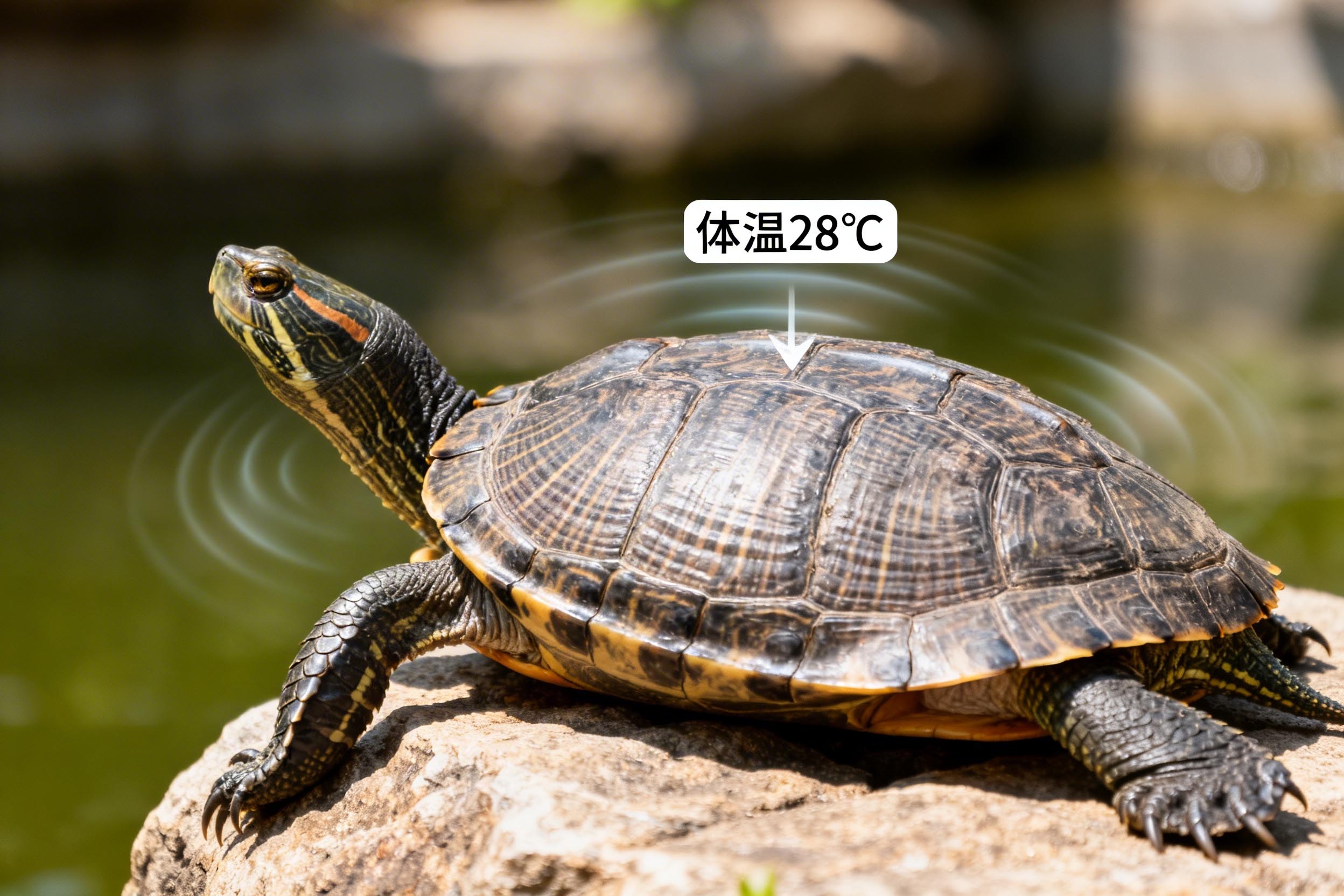
Is turtle blood cold? The survival wisdom of ectotherms
2026-03-09
12k reads
Aiguigu
Turtles are ectothermic (cold-blooded), meaning their body temperature depends on the environment. But there's more to this adaptation than meets the eye.
What are ectotherms?
Animals like turtles, snakes, lizards, and fish cannot internally regulate their body heat. They rely on external sources – mainly the sun – to warm up.
How turtles warm up
Basking is essential: turtles soak up sunlight until their body temperature reaches an optimal range (25-30°C) before becoming active. This is called behavioral thermoregulation.
Advantages of ectothermy
- Low energy needs: Turtles can survive long periods without food because they don't burn calories to stay warm.
- Adaptable to scarce resources: In harsh environments, ectotherms outcompete endotherms.
- No size constraints: Without the need for a large digestive system to fuel warmth, turtles can grow enormous (like Galápagos tortoises).
Disadvantages
- Environment-dependent: They must hibernate in cold climates or estivate in extreme heat.
- Sluggish when cold: Low temperatures make them vulnerable to predators.
The truth about "cold blood"
After basking, a turtle's blood can be warmer than a human's (over 35°C). They aren't perpetually cold – they just heat up externally.
This is why basking is non-negotiable for turtle health.